2026 Best Wheel Carrier Casting Manufacturers for Global Buyers
Choosing reliable Wheel Carrier Casting manufacturers in 2026 requires more than comparing prices. Global buyers must examine engineering capability, casting consistency, inspection systems, and long-term supply stability. A carrier may look simple, yet it supports critical wheel and suspension loads. Small defects can create costly failures, delayed shipments, or difficult field repairs.
This guide introduces manufacturers with experience in automotive and industrial casting projects. It considers material selection, mold design, heat treatment, machining accuracy, and surface protection. It also reviews practical evidence, including production equipment, quality certifications, sample reports, and traceability procedures. Clear drawings matter. So does honest communication.
Strong suppliers should explain how they control porosity, dimensional variation, and fatigue-related risks. They should also provide realistic production timelines, packaging methods, and inspection records. Buyers may need ductile iron, aluminum alloy, or other specified materials, depending on the vehicle platform and operating environment. Technical fit comes before marketing language.
Not every capable factory will suit every buyer. Some companies have excellent casting quality but limited export experience. Others communicate well but rely heavily on outside machining partners. This guide recognizes those weaknesses instead of hiding them. That matters.
The comparison also encourages site audits, prototype testing, and independent verification before major commitments. Supplier rankings can change as equipment, management, and market conditions develop. Therefore, readers should treat this overview as a starting point, not a final purchasing decision. Careful evaluation remains essential for safer products, stable costs, and dependable global cooperation.
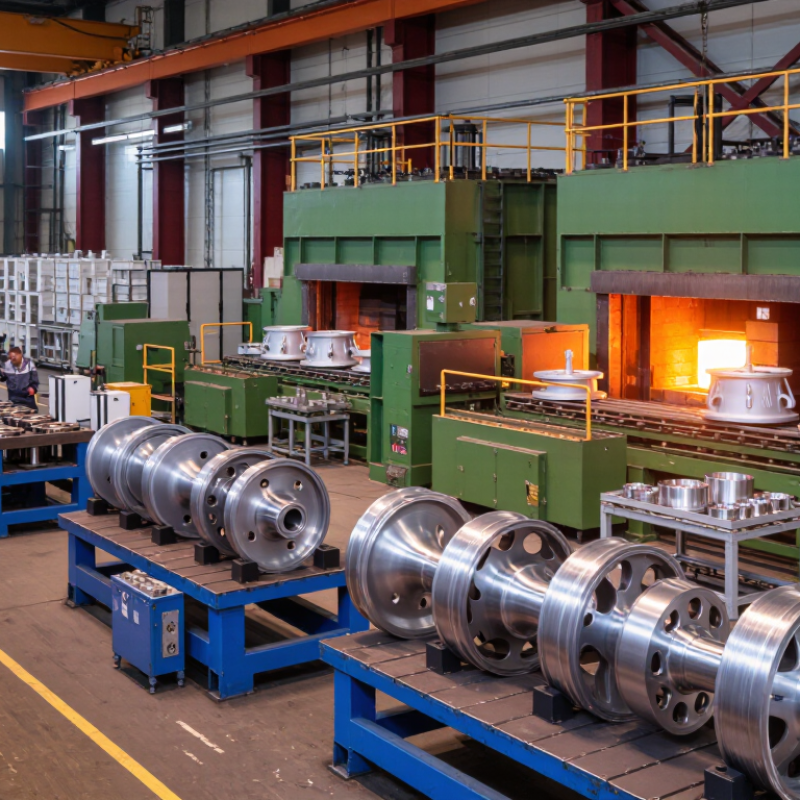
What Is a Wheel Carrier Casting and Why Does It Matter?
A wheel carrier casting is the structural hub between the wheel, suspension, steering, and braking systems. It usually supports the wheel bearing and transfers cornering, braking, and road impacts into the chassis. Its shape may look compact, but its responsibilities are substantial. Small defects can affect alignment, noise, fatigue life, or driver safety.
The U.S. Department of Energy reports that a 10% vehicle weight reduction can improve fuel economy by approximately 6% to 8%. This encourages manufacturers to develop thinner, stronger castings for passenger vehicles and electric platforms. The International Energy Agency reported nearly 14 million electric car sales in 2023. That growth increases demand for lightweight parts, although battery mass creates new structural challenges. A lighter carrier is not automatically a better carrier.
Global buyers should examine alloy selection, filling simulation, heat treatment, dimensional control, and fatigue validation. X-ray or computed tomography testing can reveal internal porosity that surface inspection misses. ISO 9001 certification supports process consistency, but certification alone cannot prove component performance. Request material certificates, capability studies, inspection records, and sample endurance results. No casting process is perfect. Manufacturing experience still matters, especially around thin sections, bearing seats, and complex ribs. Some supplier claims sound precise, yet their test conditions may not match real road loads. That detail deserves careful questioning.
Key Materials and Casting Processes Used in Wheel Carrier Production
Wheel carriers must balance low weight, steering accuracy, and resistance to repeated impact. Material selection sets much of this performance.
Ductile iron offers strong fatigue resistance and useful vibration damping. It suits heavy vehicles and demanding suspension loads.
Cast aluminum alloys reduce unsprung mass and support corrosion-resistant designs. However, aluminum needs careful heat treatment and strict control of shrinkage defects.
Cast steel remains valuable when strength and damage tolerance outweigh weight savings.
Casting processes vary with geometry, volume, and required tolerances.
Green sand casting supports prototypes and large components at moderate tooling cost.
Permanent mold casting improves surface quality and production consistency for aluminum carriers.
Low-pressure die casting can reduce turbulence and air entrapment.
Investment casting serves complex shapes, although its cost may limit high-volume use.
No process is perfect.
Supplier evaluation should include melt analysis, mold control, heat-treatment records, and dimensional reports.
A coordinate measuring machine can verify bearing bores, mounting faces, and ball-joint locations.
X-ray or computed tomography inspection may reveal internal porosity. Fatigue testing should represent real wheel loads, braking forces, and road impacts.
In practice, a clean surface does not guarantee a sound casting. I have seen specifications overlook cooling distortion, which later affects alignment.
Buyers should request full material certificates, batch traceability, process capability data, and corrective-action records before approval.
Small details matter.
How to Evaluate Global Wheel Carrier Casting Manufacturers
How to Evaluate Global Wheel Carrier Casting Manufacturers
Global wheel carrier casting suppliers should be judged by evidence, not polished brochures. The International Energy Agency reported that electric car sales exceeded 17 million in 2024. This growth increases demand for lightweight, fatigue-resistant suspension parts. Ask manufacturers for material certificates, casting-process records, dimensional reports, and traceability from billet to shipment. Their quality system should support ISO 9001, IATF 16949, and documented PPAP practices. Review Cpk results for critical bores, mounting faces, and bearing seats. A strong supplier can explain every number.
Production capability matters just as much. Examine furnace controls, mold design, heat-treatment stability, and non-destructive testing. For aluminum components, the International Aluminium Institute states that recycling uses roughly 5% of the energy required for primary production. Therefore, verify recycled-content controls and contamination testing. For iron or steel castings, request fatigue, hardness, and metallurgical reports. An independent laboratory adds credibility. Still, one test batch cannot prove long-term consistency. That is an easy mistake.
Tips: Request three consecutive production lots, not one sample. Compare defect rates, response times, and corrective-action evidence. Visit the plant if possible. Watch how operators record temperature and inspection results. Ask difficult questions. Silence is informative. Freight planning also deserves attention; confirm packaging, moisture protection, customs documents, and emergency capacity. I would score technical control above the lowest price, although cost pressure can make that judgment uncomfortable. Reliability is often visible in small details, such as labeled containers and complete inspection signatures.
Leading Manufacturer Capabilities, Certifications, and Quality Standards
For global buyers, a wheel carrier casting manufacturer must prove more than production capacity. OICA’s 2024 report recorded about 92.5 million motor vehicles produced worldwide. That scale raises pressure on dimensional control, traceability, and delivery consistency. Qualified suppliers should hold ISO 9001 and IATF 16949 certification, where applicable. They should also show current audit records, process maps, and corrective-action evidence.
Capability appears on the shop floor. Look for controlled melting, spectrometer checks, mold-temperature records, and automated inspection. For ductile iron or aluminum carriers, tensile tests, hardness checks, and metallographic analysis should follow recognized ASTM or ISO methods. PPAP files should include capability studies, measurement-system analysis, control plans, and material certificates. A clean sample is useful. Repeated evidence matters more.
No factory is flawless. The better supplier admits variation and explains its response. Ask for defect rates, 8D reports, furnace calibration history, and batch-level traceability. A useful benchmark is process capability near or above 1.33 for critical dimensions, though product risk may require more. Independent laboratory testing can confirm results. Certifications alone cannot guarantee performance. Buyers should audit packaging, corrosion protection, and change-control procedures too. Small gaps often appear there. A careful review may uncover delays between casting, machining, and final inspection, which should be corrected before volume production.
