Skip to content

2026 Top Peel Tensile Testing Machine How to Choose?

Choosing the right Peel Tensile Testing Machine in 2026 requires more than comparing prices or maximum load ratings. Engineers must examine the material, adhesive, peel angle, test speed, fixture design, and required reporting standards. A machine that performs well on flexible film may produce misleading results on labels, laminates, medical tapes, or battery components.

Dr. John Comyn, a widely cited adhesion scientist, describes adhesion as “the state in which two surfaces are held together by interfacial forces.” That principle remains practical inside every testing laboratory. The machine must apply a stable force while the bonded layers separate at a controlled speed. Small details matter. A misaligned specimen can twist. A rough clamp can damage the backing. An unstable grip can distort the final curve.

This guide explains how to compare a Peel Tensile Testing Machine for modern production and research needs. Load capacity is important, but it is not everything. Check force resolution, travel range, software functions, calibration records, safety features, and fixture compatibility. Ask whether the instrument supports ASTM, ISO, or company-specific methods. Also inspect the service network. A sophisticated machine becomes a problem when replacement parts take months.

Perfect testing does not exist. Even careful operators can introduce variation. That weakness deserves attention, not concealment. The strongest choice combines repeatable mechanics, clear data, practical maintenance, and trained users. Before selecting a model, define the real specimen and failure mode. The best machine is the one that produces useful evidence repeatedly.
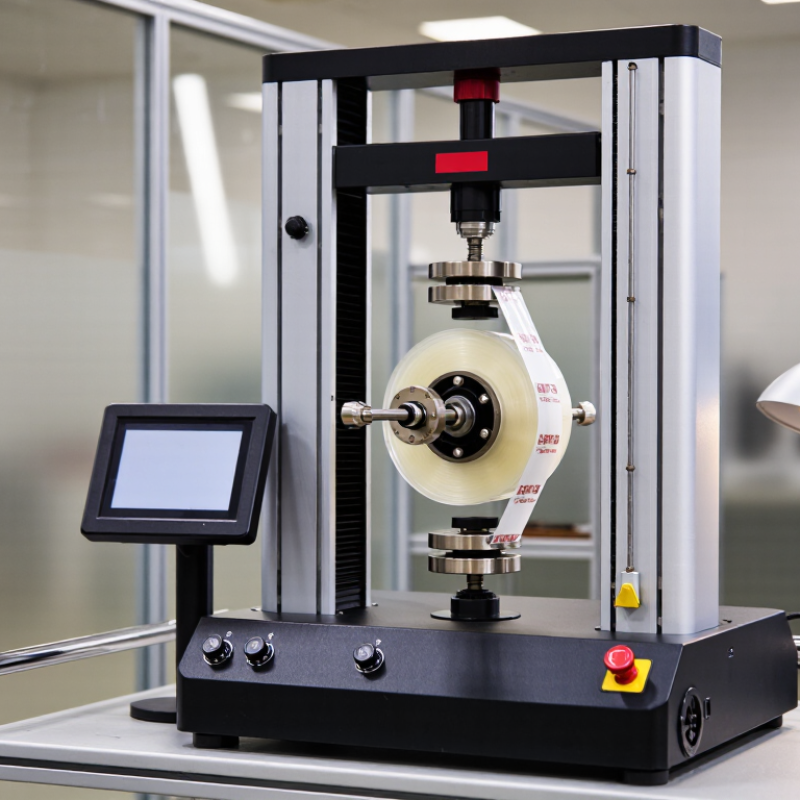
2026 Top Peel Tensile Testing Machine How to Choose?

Define Peel-Test Needs: 90°/180° Angles, Force Range, and Speed

2026 Top Peel Tensile Testing Machine: How to Choose?

Selecting a peel tensile testing machine starts with the test angle. A 90° test suits many rigid-to-flexible bonded assemblies. A 180° test is common for tapes, labels, films, and laminated materials. The fixture must hold the sample evenly. Small alignment errors can change the peeling path and distort results.

Define the expected force range before comparing machines. Estimate the lowest and highest loads from real samples, not only supplier data. A machine rated too high may lose sensitivity at low forces. A narrow range can overload during unexpected adhesive failure. Choose a load cell that keeps normal results within its middle working range. That detail is easy to overlook.

Speed also affects measured peel strength. Faster movement may increase resistance, especially with viscoelastic adhesives. Set a controllable speed that matches your internal method or relevant standard. Record speed, angle, sample width, conditioning time, and temperature with every test. Otherwise, two numbers may look comparable when they are not. I have learned that clean graphs do not guarantee sound testing. Slipping clamps, uneven cuts, and inconsistent backing can quietly weaken repeatability. Check calibration regularly, inspect the fixtures, and keep raw force curves for review.

Match Methods to Standards: ASTM D3330, ASTM F88, and ISO 8510-2

2026 Top Peel Tensile Testing Machine: How to Choose?

Choosing a peel tensile testing machine starts with the test method, not the display size. ASTM D3330 evaluates pressure-sensitive tape adhesion, commonly using a controlled 180-degree peel. The machine needs steady speed, suitable backing plates, and a load cell matched to low peel forces. A soft roller and clean test panel can change results more than expected.

ASTM F88 measures seal strength in flexible barrier materials. Its fixture must hold the seal without crushing the package film. Check jaw alignment, grip width, separation speed, and unsupported tail length. Operators should record seal temperature, dwell time, and conditioning history. Small changes in these details may create a large force variation. I have seen tidy specimens produce inconsistent curves because the cut edges were uneven.

ISO 8510-2 also uses peel testing for bonded assemblies, but the specimen geometry and test setup differ. The machine should provide stable travel, accurate angle control, and enough stroke for continuous measurement. Review the required peel direction and speed in the current standard edition. Do not assume one fixture serves every method. It may work. It may also introduce bending.

Select a calibrated load cell near the expected force range. Confirm traceable calibration, emergency stopping, software data export, and environmental control. A high-capacity frame can look professional while losing resolution at small loads. That is an easy mistake. Run repeat specimens, inspect the failure mode, and question unusually smooth data. Real materials are rarely perfectly consistent.

Compare Performance: ≤±0.5% Accuracy and 0.001–500 mm/min Speed

Choosing a 2026 top peel tensile testing machine requires more than reading its maximum load. The key comparison is accuracy of ≤±0.5% and a speed range of 0.001–500 mm/min. This range supports slow adhesive separation tests and faster packaging evaluations. However, accuracy should be checked across the working load, not only at full capacity.

In practical testing, a stable load cell helps reveal small force changes during peeling. A precise drive system also prevents uneven movement, especially at 0.001 mm/min. Watch the specimen closely. A loose grip, angled strip, or wrinkled film can distort results more than the machine itself. Adjustable peel fixtures should hold consistent angles, such as 90 or 180 degrees, while keeping the sample centered.

Calibration records, traceable weights, and repeatability data show whether the instrument deserves confidence. Testing software should capture force, displacement, speed, and peak values without hiding abnormal sections. A broad speed range sounds impressive, but it may not perform equally well at every setting. I would request results from low-speed and high-speed trials before purchasing. That step is easy to overlook. Temperature and humidity can also change adhesive behavior, so controlled test conditions matter. A machine with excellent specifications still needs trained operators, suitable fixtures, and regular verification.

Choose Capacity and Fixtures: 5–500 N Load Cells for Films and Laminates

2026 Top Peel Tensile Testing Machine: How to Choose?

Choose capacity before comparing software or frame size. A 5 N load cell suits thin films, weak seals, and low-tack laminates. A 100 N cell handles most flexible packaging bonds. Strong multilayer laminates may require 500 N. Oversizing can reduce usable resolution. That mistake is common.

ASTM D3330/D3330M commonly specifies a 25 mm strip and 300 mm/min peel speed for pressure-sensitive tape. ISO 8510-2 covers 180-degree peel testing for bonded flexible materials. Match the machine’s speed range to your selected method. Use a load cell where expected force stays near its middle range, not at the limit. A 500 N cell testing a 6 N peel may hide small failure differences.

Fixtures matter as much as capacity. Choose smooth, parallel grips for films, and self-aligning fixtures for laminates that curl. Keep the peel angle stable. I have seen clean-looking results change after only slight jaw misalignment. Check fixture width against specimen width. Record temperature, humidity, peel rate, and failure mode. ASTM F88/F88M data also shows why seal width and gripping alignment affect measured seal strength. A practical test can still be imperfect. Recheck the method when the curve looks unusually smooth.

2026 Top Peel Tensile Testing Machine: How to Choose?

Choose a load cell and fixture combination that keeps the expected peel force comfortably below the sensor capacity while maintaining accurate measurement resolution.

The chart compares common load-cell capacities with practical material categories used in 90° and 180° peel testing. Select the smallest capacity that safely covers the expected peak force, and use a suitable film, laminate, or flexible-packaging fixture.

Verify 2026 Readiness: Calibration, Software, Safety, and ISO/IEC 17025

Choosing a peel tensile testing machine for 2026 requires more than checking maximum force. In daily laboratory work, small setup errors can distort a clean-looking result. Confirm calibration records, load-cell range, displacement accuracy, and peel-angle control. Ask whether calibration is traceable to recognized standards. A certificate alone is not enough. Review the stated uncertainty.

The software should record force, travel, speed, specimen ID, operator, and environmental conditions. Look for protected audit trails and clear raw-data export. Automatic calculations save time, but they can hide a wrong gauge length. Run a known reference specimen before accepting a new method. Then inspect the graph. A smooth curve may still be wrong. Safety also deserves close attention, including guarded moving parts, emergency stops, overload protection, and practical operator training.

For an ISO/IEC 17025-oriented laboratory, procedures must link equipment, methods, personnel competence, and records. ISO/IEC 17025 does not make a machine compliant by itself. Ask how deviations are handled, not only how reports are printed. Keep maintenance history beside calibration and verification results. During an assessment, evidence matters more than confident claims. Teams sometimes trust software defaults too quickly. That habit deserves correction. A useful purchase leaves enough evidence for another technician to repeat the test, question the settings, and find an inconvenient error.

Back To Top