China Best Injection Molding Equipment Manufacturers?
Choosing among China’s best Injection Molding Equipment manufacturers takes more than comparing machine prices or clamp forces. Buyers need to examine the complete production picture: part size, resin type, expected cycle time, energy use, and available technical support. A machine that looks impressive in a showroom may behave differently beside a real production line. Details matter.
John Beaumont, an injection molding specialist and author of Successful Injection Molding, has emphasized the connection between process, mold, and material. Put as a concise paraphrase of his process-focused work: “A machine delivers consistent parts only when the whole molding system is understood and controlled.” That principle helps frame this guide. It looks beyond headline specifications to control systems, repeatability, mold compatibility, service access, and the supplier’s ability to provide clear documentation. Those checks can reveal practical differences between manufacturers.
Still, no ranking fits every factory. A small packaging producer may value fast cycles and straightforward maintenance, while a precision-parts plant may prioritize tight process control and stable results. Ask for application-specific references, sample-part testing, and a clear breakdown of installation and training. Inspect the details. Also ask what happens when a component needs replacement. Some comparisons remain imperfect because published specifications rarely show every operating condition. That is worth remembering. This overview introduces manufacturers and selection criteria, helping buyers make a more informed shortlist without treating any single supplier as the right choice for every project.
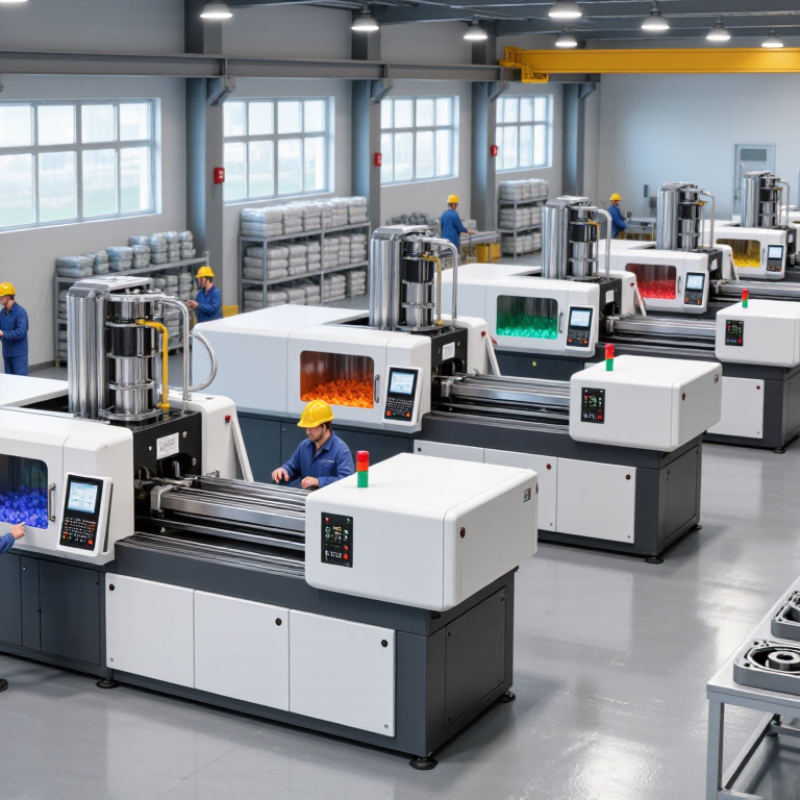
What Injection Molding Machines Do: 4 Stages from Plasticizing to Ejection
What Injection Molding Machines Do: Four Stages from Plasticizing to Ejection
Injection molding turns plastic pellets into repeatable parts through four linked stages. The scale is substantial: PlasticsEurope’s Plastics—The Fast Facts 2023 reported 400.3 million tonnes of global plastics production in 2022. Not all of it is injection molded, but the figure shows why process control matters. During plasticizing, a rotating screw conveys pellets through heated barrel zones. Friction and heat melt them into a consistent shot. A dull, uneven melt can cause visible defects later.
Next, the screw advances and injects molten plastic into the closed mold. Packing and holding maintain pressure as the material cools and shrinks. Too little pressure may leave sink marks; too much can create flash. The gate eventually freezes, ending this pressure stage. Small changes matter. Grand View Research’s 2024 Injection Molding Machine Market report valued the global market at about USD 10.3 billion in 2023, reflecting broad industrial demand, not a guarantee of performance.
In the final stage, cooling solidifies the part before the mold opens and ejector pins release it. Cooling often takes the longest, so uneven temperature can warp a part or slow production. Operators check part weight, dimensions, and surface finish, then adjust settings cautiously. In practice, one setting rarely fixes every defect. That is the awkward part: resin, mold design, and machine behavior all interact.
China’s Machine Range: 20–50,000 kN Clamping Force and Core Configurations
China’s Machine Range: 20–50,000 kN Clamping Force and Core Configurations
A 20–50,000 kN range spans very different production needs, from compact precision parts to large automotive housings. It is a market-wide range, not a promise that every factory offers every size. Clamping force should be matched to projected part area, cavity pressure, and mold layout—not part weight alone. A mismatch can cause flash, mold wear, or unnecessary energy use. Small details matter.
Toggle machines suit many mid-tonnage applications, while hydraulic designs offer flexible force control. Hybrid and all-electric configurations can support precise, repeatable cycles; vertical machines are useful for insert molding. Large molds may benefit from two-platen layouts, which can reduce floor-space demands. PlasticsEurope’s Plastics – the Fast Facts 2024 reports 413.8 million tonnes of global plastics production in 2023, underscoring the variety of processing needs behind equipment demand. That figure does not specify machine sales. Buyers still need verified cycle and energy data. ISO 20430:2020 sets safety requirements for injection molding machines, but it does not replace site-specific risk assessment.
One caveat: catalog force ranges can obscure differences in tie-bar spacing, platen size, and shot capacity. Those limits deserve a close review.
How to Compare Chinese Manufacturers: ISO 20430:2020, Capacity and Service
When comparing Chinese injection molding equipment manufacturers, treat ISO 20430:2020 as a safety reference, not a complete quality guarantee. The standard covers safety requirements for injection molding machines. Ask for a current certificate and confirm its scope includes the machine type you plan to buy. Paperwork is not enough. Review guarding, emergency stops, and safety instructions during a live demonstration.
Capacity should match your actual parts and molds. Compare clamping force, shot capacity, platen dimensions, tie-bar spacing, and mold-opening stroke. Check these figures against your largest mold and expected material usage. A machine with higher tonnage may still be a poor fit. Fit matters more. Request a sample molding trial using a representative mold, then inspect cycle stability and part consistency. Results can vary with materials and process settings, so record the conditions.
Service deserves the same scrutiny as specifications. Ask who handles installation, operator training, troubleshooting, and spare-parts supply. Request typical response times and confirm which parts are stocked locally. A promise of fast support sounds useful, but written service terms are easier to evaluate. If possible, speak with a recent customer about downtime and follow-up. Some details may remain uncertain until the machine runs in your factory; plan a realistic acceptance test.
Hydraulic, Hybrid or All-Electric: Comparing Energy Use and Precision
Choosing injection molding equipment means comparing energy use under real production conditions, not just reading rated motor power. A hydraulic press can deliver high clamping force and suit demanding applications. Its pump may consume energy while waiting between movements, depending on its design and settings. That adds up.
Hybrid machines combine hydraulic clamping or injection with electric drives. They can reduce idle energy use while retaining strong force, but results vary with cycle time, mold design, and machine configuration. A short cycle with frequent movements may show different savings from a long, steady run. Not always.
All-electric machines use servo motors for controlled movements and can offer repeatable injection speed and position. This helps when parts have thin walls or tight weight tolerances. Still, precision also depends on material drying, temperature control, mold condition, and calibration. A clean energy comparison should measure kilowatt-hours per finished part across representative shifts. It should also record scrap and cycle consistency. One detail is easy to overlook: a machine that uses less power may not be the best fit if its process stability suffers. The right choice needs production data, and even a careful trial may not capture every season or material change.
Choosing a Supplier by Tonnage, Shot Size, Automation and Lifecycle Cost
Choosing an injection molding equipment supplier in China starts with the part, not the machine brochure. Share the resin, projected area, wall thickness, and expected cycle time. These details help determine suitable clamping force and shot capacity. A tonnage rating alone can mislead. If a mold runs near machine limits, flashing, unstable filling, or excess wear may follow. Ask for the supplier’s calculation, then compare it with a trial using your mold and material. Check shot size against the part, runners, and required cushion; barrel capacity alone can overstate usable volume. Small details matter.
Automation should fit the production rhythm, not just look impressive. For steady, high-volume production, robot take-out and part checks may reduce handling variation. Frequent mold changes may call for quick connections and accessible controls instead. Ask who installs the cell, supplies wear parts, and responds when a heater or sensor fails. Then estimate lifecycle cost, including energy, maintenance, operator time, and downtime. A lower purchase price can become expensive over several years. Still, forecasts are imperfect; scrap and energy use depend on process discipline. Request references for comparable parts and cycles, and verify key assumptions during a trial where practical.
China Best Injection Molding Equipment Manufacturers? Choose a Supplier by Tonnage, Shot Size, Automation and Lifecycle Cost
Use this illustrative buyer-priority scorecard to structure supplier discussions. Ratings are sample priorities, not measured market data or rankings of manufacturers. Confirm clamping force and shot capacity against your mold, part and resin, then evaluate automation compatibility and lifecycle costs.
