Choosing among China’s top 10 quick turn CNC machining suppliers requires more than comparing quoted prices. A reliable supplier must convert digital designs into accurate, usable parts under demanding deadlines. This guide introduces ten notable companies serving prototypes, replacement components, and low-volume production. It focuses on practical evidence, not advertising language.
Our evaluation considers machining capabilities, material experience, tolerance control, inspection methods, and delivery performance. A capable workshop should explain its process clearly. It should also provide useful feedback when a drawing contains thin walls, deep pockets, or difficult datums. Look for equipment such as multi-axis mills, CNC lathes, optical inspection systems, and coordinate measuring machines. Certifications can support credibility, but they do not replace consistent part quality.
Real manufacturing details matter. A supplier may promise rapid delivery, yet material availability or surface finishing can extend the schedule. That risk deserves attention. Communication quality is equally important when specifications change across time zones. We also consider engineering support, packaging standards, sample approval, and production traceability. These factors help buyers reduce rework and unexpected costs.
The ranking should not be treated as permanent. Supplier strengths can change with equipment investments, staffing, and order volume. One company may excel at aluminum prototypes, while another performs better with stainless steel assemblies. There is no universal winner. The best quick turn CNC machining partner depends on your tolerances, budget, material, and required delivery date. Readers should request current quotations, inspection records, and realistic production timelines before making a final decision.
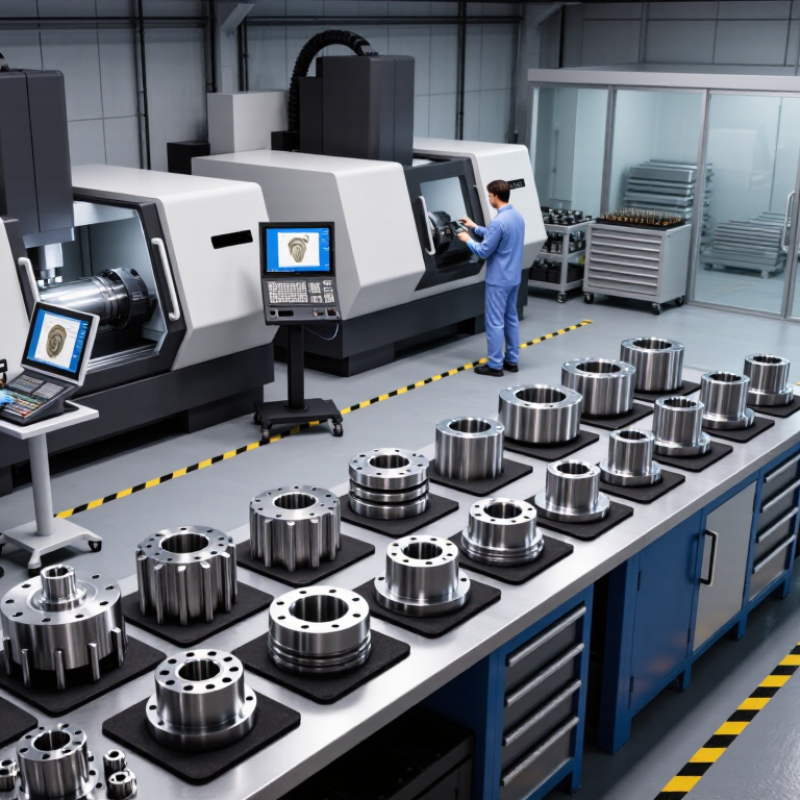
Quick-turn CNC machining is the process of producing accurate parts within a compressed schedule. It combines digital drawings, rapid programming, material preparation, machining, and inspection. Instead of waiting several weeks, product teams may receive prototypes or small batches within days. The clock starts with clear engineering data.
A reliable supplier checks tolerances, surface finish, material grade, and critical dimensions before cutting metal. Engineers may also review wall thickness, internal corners, hole depth, and tool access. These details affect both speed and cost. A practical quotation should identify machining time, inspection steps, shipping conditions, and possible risks. Vague promises are not enough.
Speed has limits. A rushed drawing review can create an expensive mistake. During production, a supplier should use calibrated measuring equipment and record inspection results. Photos of fixtures, first-article samples, and dimensional reports can improve communication across time zones. China has many capable CNC machining suppliers, but their processes are not identical. Some excel at aluminum prototypes, while others handle steel parts or tight-tolerance production more effectively. Past sample quality matters more than a polished website. Even experienced teams should question unclear tolerances and unrealistic delivery dates. A fast part is useful only when it fits, functions, and can be repeated consistently.
China’s top quick turn CNC machining suppliers should be evaluated through evidence, not polished websites. The 2023 ISO Survey recorded 1,265,216 ISO 9001 certificates worldwide. Certification matters, but it does not prove every batch is consistent. Ask for recent inspection reports, material certificates, and traceability records. A reliable supplier should explain tolerance control, surface finish, and nonconforming-part procedures clearly.
Speed must be measured from drawing approval to shipment. Request a sample timeline with programming, material purchasing, machining, inspection, and packing separated. Suppliers should disclose machine types, working envelopes, spindle capacity, and available inspection equipment. A coordinate measuring machine report is more useful than a vague “high precision” claim.
The World Bank’s 2023 Logistics Performance Index highlights customs, infrastructure, and shipment reliability as major logistics factors. Therefore, evaluate export packaging, carrier options, and actual delivery records.
Cost deserves careful review. The lowest quotation may exclude tooling, inspection, finishing, or packaging. I would compare three itemized quotations using the same drawings and revision level. Ask how the supplier handles drawing changes after production begins. Response quality is also evidence: unclear answers often become production delays. My evaluation would include a small pilot order before larger volumes. A certificate can age. A capability claim can be exaggerated. Even experienced buyers sometimes overlook communication across time zones, which quietly damages quick-turn performance.
Who are the top 10 quick turn CNC machining suppliers in China? A reliable answer should consider verified production ability, not advertising claims. The strongest suppliers usually include precision machine shops serving electronics, medical devices, robotics, automotive parts, and industrial equipment. They offer rapid quotation, short prototype cycles, and flexible quantities. Their workshops commonly use three-axis, five-axis, turning, milling, and Swiss-type equipment.
The leading ten supplier profiles often share several practical strengths. Some specialize in aluminum housings and tight-tolerance prototypes. Others focus on stainless steel shafts, brass fittings, or engineering plastics. Several provide anodizing, passivation, powder coating, laser marking, and heat treatment through controlled partners. Experienced teams review drawings before cutting. They also check thread depth, flatness, surface finish, and critical dimensions with calibrated equipment. Useful evidence includes inspection reports, material certificates, sample parts, and clear delivery records.
A ranking is never perfect. Capacity can change after one large order. A supplier with excellent speed may need stronger finishing control. Another may deliver superb tolerances but quote slowly. Buyers should request a detailed drawing review and ask how rejected parts are handled. Confirm machine availability, tolerance capability, inspection methods, packaging, and communication response time. A small test order reveals more than polished photographs. Real shop-floor proof matters.
| Position | Anonymous Supplier Profile | Primary CNC Processes | Common Materials | Typical Prototype Lead Time | Standard Machining Tolerance | Maximum Reported Part Size | Surface Finishing Options | Quality Documentation | Best Fit Applications |
|---|---|---|---|---|---|---|---|---|---|
| 1 | Supplier Profile A | 3-axis milling 5-axis milling CNC turning | Aluminum, stainless steel, brass, titanium, engineering plastics | 3–5 business days | ±0.01 mm typical | Approx. 500 × 500 × 500 mm | Anodizing, passivation, powder coating, bead blasting, polishing | Dimensional inspection report, material certificate, first-article report on request | Functional prototypes, automation parts, low-volume production |
| 2 | Supplier Profile B | CNC milling CNC turning Swiss turning | Aluminum, carbon steel, stainless steel, copper alloys, POM, nylon | 3–7 business days | ±0.015 mm typical | Approx. 400 × 400 × 600 mm | Black oxide, zinc plating, electroless nickel, anodizing | In-process inspection, final inspection report, RoHS documentation | Precision shafts, connectors, medical and laboratory components |
| 3 | Supplier Profile C | 3-axis milling 4-axis milling CNC turning | Aluminum, mild steel, stainless steel, brass, ABS, PC | 4–8 business days | ±0.02 mm typical | Approx. 600 × 500 × 500 mm | Anodizing, laser marking, silk screening, powder coating | Certificate of conformity, dimensional report, lot traceability | Consumer electronics, enclosures, fixtures, robotics components |
| 4 | Supplier Profile D | 5-axis milling CNC turning Wire EDM | Titanium, stainless steel, tool steel, aluminum, PEEK, Delrin | 5–10 business days | ±0.01 mm typical | Approx. 300 × 300 × 400 mm | Passivation, electropolishing, heat treatment, precision grinding | FAI report, CMM inspection, material and heat-treatment certificates | Aerospace prototypes, complex tooling, high-precision mechanisms |
| 5 | Supplier Profile E | CNC milling CNC turning Sheet metal integration | Aluminum, stainless steel, galvanized steel, brass, ABS, acrylic | 4–7 business days | ±0.02 mm typical | Approx. 800 × 500 × 500 mm | Powder coating, anodizing, brushing, painting, plating | Visual inspection, dimensional report, coating-thickness report | Industrial equipment, electrical cabinets, product housings |
| 6 | Supplier Profile F | CNC turning Swiss machining Thread machining | Brass, stainless steel, aluminum, carbon steel, copper, PEEK | 3–6 business days | ±0.01–0.02 mm typical | Diameter up to approx. 65 mm; length up to approx. 300 mm | Nickel plating, chrome plating, passivation, polishing, black oxide | Thread gauges, dimensional inspection, material certificates | Fasteners, valves, sensors, fittings, miniature mechanical parts |
| 7 | Supplier Profile G | CNC milling CNC turning Prototype assembly | Aluminum, stainless steel, brass, mild steel, nylon, polycarbonate | 5–8 business days | ±0.02 mm typical | Approx. 500 × 400 × 400 mm | Bead blasting, anodizing, painting, laser engraving | Inspection checklist, assembly record, certificate of conformity | Consumer products, test fixtures, mechanical prototypes |
| 8 | Supplier Profile H | CNC milling CNC turning Micro-machining | Aluminum, stainless steel, titanium, brass, PEEK, PTFE | 6–12 business days | ±0.005–0.02 mm typical | Approx. 250 × 250 × 300 mm | Electropolishing, passivation, anodizing, precision deburring | CMM report, surface-roughness report, process traceability | Optical equipment, medical devices, laboratory instruments |
| 9 | Supplier Profile I | CNC milling CNC turning Low-volume production | Aluminum, stainless steel, carbon steel, brass, ABS, POM | 5–10 business days | ±0.02–0.03 mm typical | Approx. 700 × 500 × 500 mm | Powder coating, anodizing, zinc plating, brushing, polishing | Sampling inspection, final inspection report, batch traceability | Industrial prototypes, replacement parts, production tooling |
| 10 | Supplier Profile J | 3-axis milling CNC turning Rapid tooling | Aluminum, tool steel, stainless steel, brass, ABS, PC, nylon | 5–12 business days | ±0.02–0.03 mm typical | Approx. 600 × 500 × 400 mm | Painting, anodizing, black oxide, bead blasting, texturing | Dimensional inspection, visual inspection, material documentation | Product development, jigs and fixtures, pilot production |
Comparing the top ten quick-turn CNC machining suppliers requires more than reading delivery promises. Quality appears in measurable details: dimensional tolerance, surface finish, material certificates, and inspection records. Ask for a sample inspection report, not only a polished website image. A reliable supplier should explain how it handles tool wear, thermal changes, and difficult geometries. That conversation often reveals real engineering experience.
Speed depends on the entire workflow. Fast quoting is useful, but it does not guarantee fast production. Check response time, design-for-manufacturing feedback, programming capacity, machine availability, and shipping arrangements. Suppliers with clear milestone updates usually create fewer surprises. Still, an urgent prototype may move quickly while a larger batch slows down. Capacity claims can be incomplete.
Cost comparisons need careful reading. A low unit price may exclude setup, special tooling, inspection, finishing, packaging, or expedited freight. Request an itemized quotation with revision terms and minimum order conditions. Experienced buyers should compare total delivered cost, not just machining rates. One weakness remains: supplier rankings often rely on limited public data. A small trial order can expose inconsistent finishes, delayed answers, or unexpected charges. That evidence deserves more weight than attractive sales language.
Comparison of typical quality, turnaround speed, and relative cost benchmarks
The chart uses anonymized supplier-performance groups rather than company or brand data. Quality is represented by typical achievable dimensional tolerance, speed by quoted business-day turnaround, and cost by a normalized index where 100 represents the highest-cost benchmark. Tighter tolerances and shorter lead times generally require higher prices.
Choosing among China’s top quick-turn CNC machining suppliers requires more than comparing hourly prices. Buyers should examine process control, communication, and delivery evidence. Ask whether the supplier can machine your material, tolerance range, and surface finish consistently. A capable workshop should explain its equipment, inspection methods, and production limits in clear terms.
Request a sample inspection report with dimensions, tolerances, and measurement equipment listed. Ask for material certificates and batch traceability. Confirm whether the supplier uses calibrated CMMs, micrometers, or optical systems. Ask for photos of similar parts, not only polished website images. Verify capacity by discussing spindle availability, fixture planning, and expected daily output. Ask for evidence.
Communication often reveals operational maturity. Send a drawing with one difficult feature and observe the response. Does the engineer identify risks, or simply promise fast delivery? Confirm prototype timing, revision control, packaging, and shipping responsibilities in writing. A reliable supplier should report delays early and propose practical corrections. Silence is expensive.
Price deserves careful interpretation. A low quotation may exclude finishing, inspection, tooling, or export packing. Compare complete quotations line by line. I would also request a small trial order before approving repeated production. No checklist is perfect. Even experienced buyers can overlook burr control or cosmetic requirements. Define acceptance criteria with photographs and measurable limits, then review the first parts under real assembly conditions. That extra review may expose problems a quick visual inspection misses.