China Top 10 CNC Machine Basic Knowledge for Global Buyers
China’s CNC machine industry serves automotive, aerospace, electronics, medical, and general engineering markets worldwide. China remains a major force in global machine-tool production and consumption, according to Gardner Intelligence’s World Machine Tool Survey. The International Federation of Robotics also reported that China installed 276,288 industrial robots in 2023, representing more than half of global installations. These figures show scale, but scale does not guarantee the right machine for every workshop.
This guide introduces CNC machine basic knowledge for global buyers comparing Chinese suppliers. It covers machine types, axis configurations, controllers, spindle speed, accuracy, repeatability, tooling, workholding, materials, automation, and after-sales support. ISO 230 standards provide useful references for machine-tool testing, while ISO 9001 can help buyers assess a supplier’s quality-management system. Still, certificates are not enough. Ask for inspection records, ball-bar results, sample parts, and actual tolerance data from similar materials.
Details matter. A three-axis mill may suit aluminum brackets but struggle with complex steel molds. A 0.01 mm tolerance claim needs measurement conditions, temperature control, and a defined inspection method. Request photos of the machine assembly, wiring labels, lubrication points, and control cabinet. Then compare service response times, spare-parts availability, installation training, and total ownership cost.
Some buying assumptions deserve reconsideration. The lowest quotation may hide weaker components, limited software support, or expensive downtime. China offers excellent manufacturers, but quality varies across regions and factories. Careful verification remains essential. This practical overview helps buyers ask sharper questions before signing a purchase order.
CNC Machine Types Commonly Manufactured in China
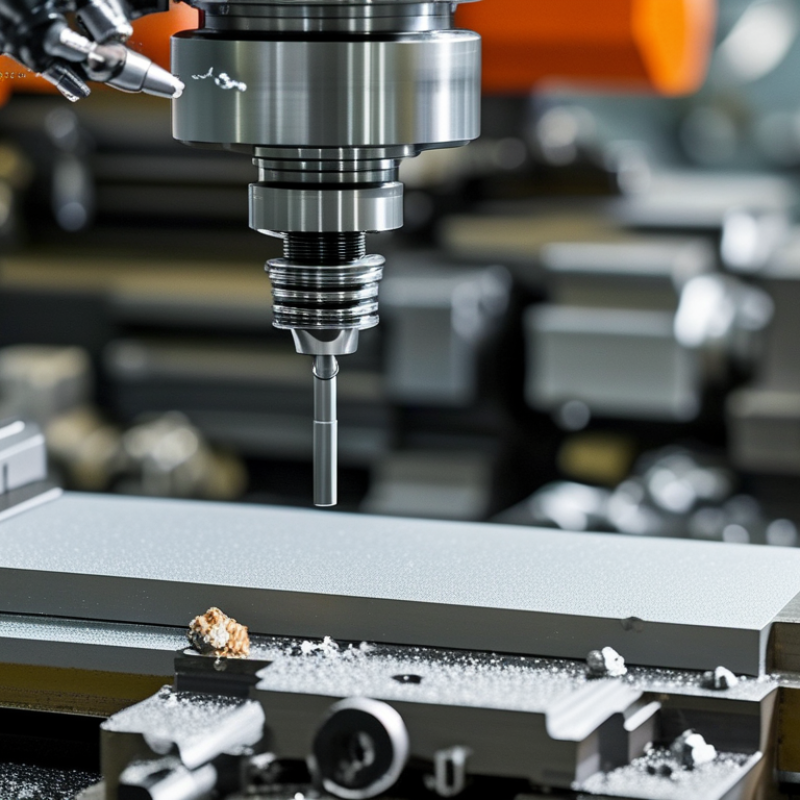
China’s CNC manufacturing base covers several machine types. Turning centers handle shafts, bushings, and threaded parts. Vertical machining centers suit plates, molds, and general components. Horizontal machining centers improve chip evacuation during repeated production. Five-axis machines cut curved aerospace and medical geometries with fewer setups. Wire and sinker EDM machines process hardened materials that cutting tools struggle to shape.
Grand View Research estimated the global CNC machine market at USD 83.9 billion in 2023. Asia-Pacific held the largest regional revenue share, showing strong demand for Chinese production capacity. Buyers should still separate machine type from machine quality. A five-axis label does not guarantee stable simultaneous motion. That gap matters.
For evaluation, request test results based on ISO 230-2 or ISO 10791. Check positioning accuracy, repeatability, spindle runout, thermal drift, and sample-part consistency. Laser interferometer records are useful, but only when linked to the delivered machine. A turning center may look attractive for price-sensitive work, yet its chuck, turret, and bar-feeding limits can restrict future orders. Ask about castings, control compatibility, service response, and spare-part availability. Catalogs rarely show vibration marks or warm-up time. That is the uncomfortable part. The buyer must inspect evidence, not promises.
Core CNC Components and How They Work
China Top 10 CNC Machine Basic Knowledge for Global Buyers
A CNC machine turns digital instructions into controlled cutting movements. The controller reads programmed coordinates and sends signals to each drive. Servo motors then move the axes through ball screws or linear systems. These parts determine positioning accuracy, repeatability, and surface quality.
The spindle supplies cutting power and controls tool rotation speed. Its bearings must remain stable under heat and load. A tool holder connects the cutter to the spindle, while an automatic tool changer reduces manual handling. The workholding system keeps the material fixed. Even a small shift can create visible errors. Coolant removes heat, clears chips, and extends tool life. However, coolant design should match the material and cutting process.
Tips: Ask for axis accuracy tests, spindle runout data, and sample machining results. Check how the supplier measures them. A polished specification sheet is not enough. Inspect controller access, maintenance points, and spare-part availability. Buyers sometimes focus on maximum speed and overlook rigidity. That can be an expensive mistake. Confirm electrical requirements, training support, and acceptance procedures before shipment. Also, review test pieces carefully. A machine may perform well once, yet need deeper evaluation under continuous production.
China Top 10 CNC Machine Basic Knowledge for Global Buyers
The chart shows practical starting spindle-speed ranges for common workpiece materials. Actual settings depend on tool diameter, tool material, cutting depth, feed rate, coolant, and machine rigidity.
The ten core CNC elements are the controller, servo motor, drive system, spindle, ball screw, linear guideway, encoder, tool holder, coolant system, and machine bed. Together, they convert programmed coordinates into controlled cutting motion while maintaining positioning accuracy, rigidity, and heat management.
Key Specifications Global Buyers Should Compare
When comparing CNC machines, global buyers should begin with the working envelope. Confirm X, Y, and Z travel against your largest planned workpiece, not today’s smallest order. A machine may look spacious, yet its fixture and tool holder reduce usable clearance. Table dimensions and maximum load also matter. Heavy steel parts need stable support, while thin plates may require different clamping methods.
Spindle speed, torque, and motor power should match the materials and cutters you use. High speed helps aluminum and small tools, but torque is more important for steel and deep cuts. Check axis accuracy and repeatability separately. A claimed tight tolerance may depend on temperature, calibration, and operator skill. From practical evaluations, control-system compatibility and program transfer are often overlooked. Confirm file formats, network options, language settings, and backup procedures. I have seen buyers choose impressive specifications, then struggle with unfamiliar controls. That mistake is avoidable, but not always cheap.
Tips: Request a test cut using your material, drawing, and preferred tooling. Measure the finished part independently. Ask for spindle runout, positioning-test records, electrical requirements, coolant capacity, and maintenance intervals. Consider factory-floor conditions, including voltage stability, humidity, available space, and chip removal. A larger machine is not automatically better. Sometimes, smaller is wiser. Service response, technical documents, training, and spare-part availability should be compared as carefully as cutting performance.
Chinese CNC Machine Quality, Standards, and Certifications
Chinese CNC machine quality should be judged through standards, testing records, and production evidence.
The ISO Survey 2023 recorded 426,716 ISO 9001 certificates in China. This indicates broad quality-system adoption, but certification alone cannot prove machining accuracy. Buyers should request calibration records, factory acceptance test results, and traceable inspection data.
Mechanical and Electrical Standards
For mechanical accuracy, ISO 230 provides methods for testing machine tools, including positioning accuracy, repeatability, and thermal behavior. GB/T 17421 adopts related international testing principles in China. Electrical systems should follow GB/T 5226.1, while GB/T 19001 corresponds closely with ISO 9001 quality management requirements. CE compliance may be required for European shipments, but it is a declaration process, not a universal quality certificate.
Practical checks matter more.
Inspection Evidence to Request
Ask for a laser interferometer report, spindle runout readings, and sample-cut results. The report should show test conditions, instrument calibration dates, and acceptance tolerances.
ISO’s World Manufacturing Survey data also highlights China’s large manufacturing scale, yet scale can create uneven supplier performance. A small workshop may deliver excellent machines; a large factory may still miss details.
Buyers should inspect wiring labels, guarding, coolant leakage, software documentation, and spare-part traceability.
One weak point remains: many reports are prepared under ideal conditions. Independent pre-shipment inspection is still worth considering.