
How to Choose Dual Exhaust Tips for Your Car in 2026?
Choosing the right Dual Exhaust Tips in 2026 involves more than matching a shiny finish to your bumper. These small components shape the rear appearance, influence outlet direction, and can change how exhaust sound is perceived. A polished stainless-steel tip may suit a daily sedan, while carbon-fiber-look sleeves can complement a sportier build. However, appearance alone is a weak buying test. Fit, heat resistance, pipe diameter, mounting method, and clearance deserve equal attention. Measure twice. It prevents expensive frustration.
This guide draws on practical installation considerations, manufacturer specifications, and common ownership experiences. It explains how to compare single-wall and double-wall designs, slash-cut and rolled edges, clamp-on and welded options, and finishes such as chrome, black ceramic, and brushed stainless steel. Reliable choices should tolerate road spray, thermal cycling, and ordinary washing without quickly discoloring. Exhaust tips do not usually create dramatic power gains, despite some marketing claims. That point is easy to overlook.
A careful selection also respects the vehicle’s original exhaust system and local noise or emissions requirements. Product labels can be vague, and universal parts may require adjustments that are not obvious in online photos. Check the manufacturer’s dimensions, installation instructions, and warranty before ordering. An experienced exhaust technician can confirm alignment and safe bumper clearance. Even then, results may vary with the car’s model, engine, and existing modifications. The goal is not the loudest finish. It is a balanced upgrade that looks intentional, stays secure, and remains dependable through daily driving.
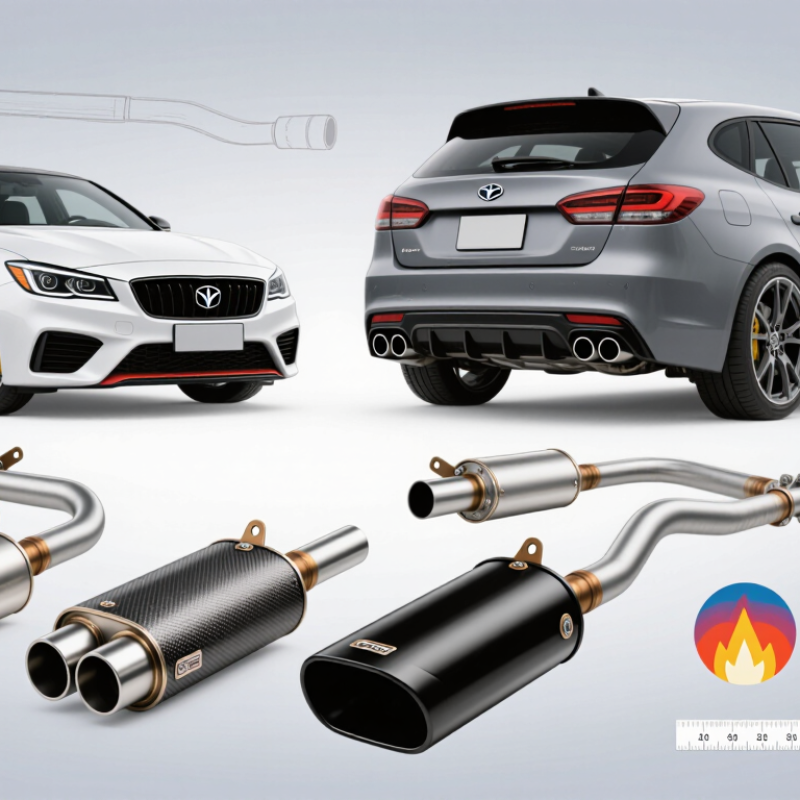
Understanding Dual Exhaust Tip Types and Their Functions
How to Choose Dual Exhaust Tips for Your Car in 2026?
Dual exhaust tips are not merely decorative tubes. They control the final outlet shape, protect bumper edges, and influence how exhaust sound reaches the ground. Common types include single-wall, double-wall, rolled-edge, slash-cut, and resonated tips. Single-wall tips look clean and stay lightweight. Double-wall designs provide better heat protection around plastic bumpers. Rolled edges soften the appearance and reduce sharp contact points. Slash-cut tips create a sportier visual line, but they may collect more soot on the cut surface.
Choose the tip according to the exhaust layout. A true dual system needs two matching inlet sizes, while a single-in, dual-out system may use smaller outlets. Measure the pipe, not the old tip’s outer edge. A loose fit can cause vibration. An oversized outlet usually adds appearance, not horsepower. That detail is often misunderstood. Inlet diameter, weld quality, and clearance matter more.
The 2024 SEMA Market Report valued the U.S. specialty-equipment market at 52.3 billion dollars in 2023. That scale reflects strong demand for functional personalization, not automatic performance gains. Industry exhaust-system research also repeatedly identifies stainless steel as a preferred material for corrosion resistance and longer service life. Check the vehicle’s bumper temperature area after installation. A double-wall tip can help, but it cannot correct poor alignment. I would also question highly polished finishes; road salt and condensation quickly expose neglected maintenance. Choose balanced proportions, secure mounting, and a tip that matches the pipe’s actual function.
How to Choose Dual Exhaust Tips for Your Car in 2026? — Understanding Dual Exhaust Tip Types and Their Functions
| Exhaust Tip Type | Typical Construction | Main Function | Appearance and Sound Effect | Installation Considerations | Best Suited For | Advantages | Limitations |
|---|---|---|---|---|---|---|---|
| Single-Wall Dual Tips Simple design Low weight | One layer of stainless steel or aluminized steel formed into two outlet tubes. | Provides two visible outlets while mainly serving as an exhaust outlet extension and styling component. | Clean, lightweight appearance. Usually produces little change in exhaust tone because the tip does not significantly alter the exhaust system's internal volume. | Requires a correctly sized inlet diameter and enough clearance from the bumper, heat shields, and suspension components. | Daily-driven cars, budget upgrades, and vehicles that already have a dual-outlet exhaust layout. | Affordable, light, and generally easy to install. Creates a clear dual-outlet appearance. | Offers limited heat protection and may discolor more quickly under high exhaust temperatures. |
| Double-Wall Tips Layered body Heat resistance | Two concentric metal layers, commonly using stainless steel or a stainless outer shell over a steel inner tube. | Improves the visual thickness of the outlet and provides additional protection around the outer surface. | Produces a substantial, premium appearance. Sound change is normally modest and depends more on the muffler and resonators. | Check the total outer diameter because the tip may require more bumper and cutout space than a single-wall design. | Cars needing a fuller-looking exhaust outlet and better resistance to visible heat staining. | More durable appearance, better surface protection, and a thicker outlet profile. | Heavier and usually more expensive than a comparable single-wall tip. |
| Turn-Down Tips Downward outlet Reduced projection | A tip whose outlet is angled downward rather than extending straight rearward. | Directs exhaust flow toward the ground and can reduce the visual length of the tailpipe. | Usually has little effect on overall sound. Its main visible feature is the downward-facing outlet. | Maintain adequate ground clearance and keep the outlet away from the bumper, underbody panels, and heat-sensitive parts. | Pickup trucks, utility vehicles, and vehicles where a less prominent rear outlet is preferred. | Can help limit direct exhaust discharge toward the bumper and reduce the chance of soot on certain rear surfaces. | May increase exhaust noise or fumes underneath the vehicle if the outlet is positioned too far forward or too close to the cabin. |
| Angle-Cut Tips Sport styling Directional opening | A tube cut diagonally at the outlet, usually made from stainless steel or coated steel. | Changes the visible shape of the outlet and can direct the opening slightly upward or downward depending on its orientation. | Creates an aggressive, performance-oriented appearance. Sound changes are generally minor when the internal diameter remains similar. | The cut direction must match the left and right sides for a balanced appearance. Confirm clearance around the bumper opening. | Sport-styled cars and dual exhaust layouts with large, visible bumper cutouts. | Distinctive appearance and a wide-looking outlet face without requiring a large increase in tube diameter. | Asymmetric installation can look uneven. The angled edge may collect more visible soot than a straight-cut outlet. |
| Slant-Cut Tips Extended angle Visual emphasis | A longer diagonal cut that creates a more pronounced oval-shaped opening when viewed from behind. | Primarily enhances styling and provides a directional outlet extension. | Gives the exhaust a sharper and more dynamic appearance. It normally has limited influence on sound unless the tip changes the effective outlet area substantially. | Verify the tip's overall length so it does not protrude excessively or interfere with the bumper design. | Performance-inspired builds and cars with exposed rear exhaust outlets. | Strong visual impact and a larger-looking opening without necessarily using a very large round tube. | More sensitive to alignment and bumper clearance. Excessive protrusion can create a fitment and safety concern. |
| Rolled-Edge Tips Rounded lip Refined finish | A tube with an outward-rolled or rounded edge at the outlet. | Softens the outlet edge, improves the finished appearance, and adds rigidity to the tip opening. | Creates a fuller, smoother appearance. The rounded edge generally produces little measurable sound change by itself. | Check that the rolled lip does not reduce the available clearance inside the bumper cutout. | Luxury-oriented styling, classic cars, and vehicles requiring a less sharp-looking exhaust outlet. | Attractive finish, improved edge strength, and a visually larger outlet opening. | Can be heavier and may trap water or soot around the rolled edge if cleaning is neglected. |
| Resonated Tips Internal chamber Tone control | An exhaust tip containing an internal chamber or perforated section designed to influence certain sound frequencies. | Helps modify exhaust tone and may reduce selected high-frequency or metallic sounds. | Can produce a deeper or smoother tone, but the result depends on the complete exhaust system, engine, and tip dimensions. | Requires sufficient inlet and outlet dimensions, correct flow direction, and adequate space for the longer or wider internal structure. | Drivers seeking a sound adjustment without replacing the entire muffler or exhaust system. | May refine exhaust tone while retaining the existing exhaust layout. | Sound results are vehicle-specific, and it may add restriction if the internal design is poorly matched to the exhaust system. |
| Interchangeable Dual Tips Modular design Flexible styling | A tip assembly with removable sleeves, outlets, or end sections that can be replaced or repositioned. | Allows the outlet style, length, or finish to be changed without replacing the entire inlet section. | Appearance depends on the selected end section. Sound impact is typically small unless the internal passage dimensions change. | Inspect clamps, fasteners, alignment points, and locking hardware regularly. All sections must remain secure under vibration and heat. | Owners who want adjustable styling or easier future maintenance. | Flexible, serviceable, and useful for experimenting with different outlet shapes. | More joints can create additional loosening points, and the assembly may be heavier than a fixed tip. |
| Valved or Adjustable-Outlet Tips Variable flow Specialized use | A tip or outlet assembly incorporating a controllable flap or valve; the valve may be vacuum-, electric-, or mechanically actuated. | Changes the available exhaust path or outlet behavior under specified operating conditions. | May provide different sound levels or tones, but it cannot replace the function of a properly designed muffler and emissions system. | Requires correct control integration, heat-resistant components, safe valve positioning, and compliance with local noise and emissions rules. | Specialized performance applications and vehicles designed to support electronically or mechanically controlled exhaust components. | Offers adjustable character and can combine quieter and louder operating modes when properly engineered. | More complex, costly, and maintenance-intensive. Incorrect installation can cause noise, heat, or drivability problems. |