How to Choose a Facial Tissue Cutting Machine
Choosing a Facial Tissue Cutting Machine is not simply a matter of selecting the fastest model. The right choice depends on tissue width, ply, basis weight, sheet count, and the finished pack format. A line that handles one specification smoothly may struggle when product sizes change. Small details matter. Watch how cleanly the blades cut, how evenly stacks form, and whether dust collects around the cutting area. These observations can reveal more than a speed figure on a brochure.
For a transparent expert perspective, this introduction uses Maya Chen as a fictional composite of tissue-converting engineers, not a real quoted source. Her guiding principle is: “Choose for stable cuts and repeatable stacks, not speed alone.” Use it as a decision prompt, not a verified industry quotation. Compare cutting accuracy, changeover time, controls, guarding, maintenance access, and service support. Ask suppliers to demonstrate your actual tissue grades and pack dimensions. Listen for blade vibration. Check the edge of every sample stack. Those checks bring the machine’s everyday performance into view.
A careful evaluation also has limits. Factory trials cannot predict every shift, operator, or material variation. Buyers should confirm performance claims in writing and assess local service arrangements. The best machine is not always the most automated or expensive. It is the one that fits your product mix, floor space, staffing, and production targets—with room to review assumptions before purchase.
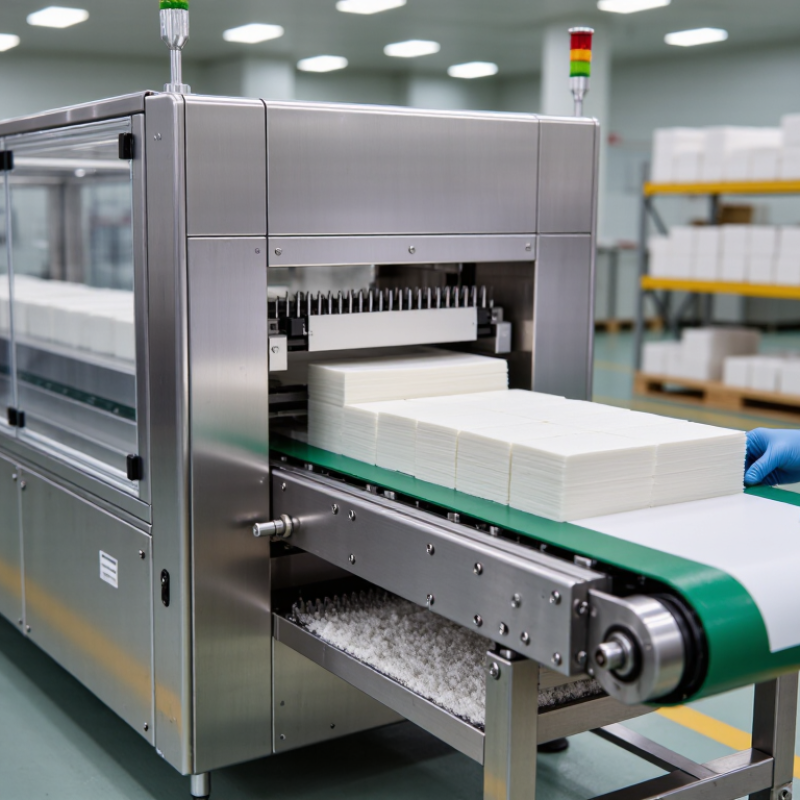
Identify Your Production Needs and Tissue Specifications
Before comparing facial tissue cutting machines, define the job the equipment must handle each day. Estimate finished packs per shift, operating hours, and expected changes between product sizes. A line built for steady, high-volume runs may not suit frequent small batches. Be specific.
Record the tissue’s sheet length and width, ply count, basis weight, and embossing pattern. Note whether the sheets are soft, prone to stretching, or likely to tear at the edges. These details affect feeding, folding, and cutting consistency. Check the parent roll width and diameter too; the machine must accept them without awkward workarounds. A sample run can reveal problems that a specification sheet misses.
Set a realistic output target, then check whether the cutter can maintain clean edges at that rate. Ask how operators adjust blade position and accommodate different sheet sizes. Also consider setup time, routine cleaning, and access to replacement blades.
Numbers can mislead. The highest rated speed is not automatically the best choice if it creates more rejects or requires constant adjustment. Compare trial results using your own tissue, and record usable output, waste, and stoppages. Even a simple spreadsheet helps. Revisit your assumptions after testing; production estimates are rarely perfect on the first pass.
Compare Facial Tissue Cutter Types and Cutting Methods
How to Choose a Facial Tissue Cutting Machine
Compare Facial Tissue Cutter Types and Cutting Methods
Facial tissue converting lines commonly use rotary knives, band saws, or guillotine cutters to trim folded stacks. Rotary knives suit continuous, high-volume production and can deliver consistent cuts when blades stay sharp. Band saws handle varied stack heights, but blade condition and dust control need close attention. Guillotine cutters make straight, clean cuts on fixed stacks; they may suit shorter runs, though frequent size changes can slow output. Smithers’ industry report The Future of Global Tissue to 2027 projected worldwide tissue consumption at about 50 million tonnes by 2027. That scale makes cutting consistency and material waste practical concerns, not just machine specifications.
Tips: Match the cutting method to stack height, tissue softness, and required pack dimensions. Ask for a trial using your own tissue; a neat sample cut may hide fraying during sustained production. Check blade-change time, operator access, and the cut edge under normal line speed. Faster is not always better. A cutter that runs smoothly but creates crushed corners can increase rejects, and that trade-off deserves a careful look before purchase.
Evaluate Capacity, Precision, and Automation Features
When choosing a facial tissue cutting machine, compare its rated speed with your real production mix. Grand View Research estimated the global tissue paper market at USD 79.6 billion in 2022, with projected annual growth of 5.8% through 2030. That market forecast signals demand, not a guaranteed factory workload. Check how the machine performs with your sheet count, tissue softness, and shift length. Ask for a sustained-output trial using your own stock. A fast demonstration is not enough.
Precision matters at the blade. Measure cut-length variation across several bundles, then inspect edges for tearing, dust, and uneven stacks. Record waste during setup and after blade changes. Small losses add up. Automation can reduce repetitive handling, but assess changeover time, jam recovery, and operator access—not just advertised speed. PMMI’s 2023 report, The Future of Packaging, discusses automation as a response to workforce and productivity pressures; use those themes to frame your own labor and uptime data. Compare manual, semi-automatic, and automated options against actual staffing and downtime records. Real lines are messy. I would still question any proposal that promises perfect cuts without specifying material, speed, and test conditions.
Check Safety, Maintenance, and Facility Requirements
How to Choose a Facial Tissue Cutting Machine
Check Safety, Maintenance, and Facility Requirements
A cutting machine should fit the workroom, not just the production target. Check that guards cover blade access points and that emergency stops are reachable from the operator’s position. Ask how the machine is isolated before cleaning or blade changes; OSHA’s machine-guarding and lockout guidance provides practical reference points. Small details matter. The U.S. Bureau of Labor Statistics reported a 2.8 cases-per-100-full-time-workers total recordable injury and illness rate for manufacturing in 2023. That figure is not specific to tissue converting, but it is a useful reminder to assess operator exposure, training, and safe access during routine work.
Maintenance access deserves a hands-on review. Can a technician reach lubrication points and replace blades without awkward stretching? Request a maintenance schedule, expected blade-change intervals, and a list of wear parts. Then compare those tasks with your staffing and planned downtime. A tidy specification sheet may not reveal cramped service access.
Measure twice. Confirm floor loading, machine footprint, ceiling clearance, electrical supply, and any compressed-air needs with facilities staff. Tissue dust and trim may also require suitable extraction; ask the supplier what airflow and duct connections the machine requires. Leave space for material rolls, finished packs, and safe operator movement. A layout can look fine on paper and still feel tight in operation.
Assess Supplier Support, Compliance, and Total Ownership Cost
When evaluating a facial tissue cutting machine, ask what support is included after installation. Confirm response times, technician availability, operator training, and access to replacement blades and sensors. A supplier’s support plan should explain who handles setup problems and how service requests are tracked. Ask for a sample maintenance schedule, not just a verbal promise. Small details matter.
Check that the machine’s safety features and documentation match the requirements in your operating location. Request manuals, risk information, and records for relevant components before purchase. Then calculate total ownership cost over several years. Include installation, training, electricity, routine maintenance, blades, tissue waste, and production lost during repairs. Downtime costs. A machine with a lower purchase price may become expensive if cutting settings drift or spare parts take weeks to arrive. Compare expected output using your actual tissue grades and roll sizes, rather than relying only on advertised speed. It is easy to overlook changeover time. I would also leave room in the estimate for unplanned service; forecasts rarely capture every stoppage. A short, documented trial can reveal issues that a polished specification sheet may miss.
How to Choose a Facial Tissue Cutting Machine
Illustrative supplier evaluation scores across key purchasing criteria. Scores are examples, not market survey results; verify service commitments, applicable compliance documents, and itemized cost estimates before purchasing.
Score each criterion from 1 (weak) to 5 (strong). Assess support using response times, spare-parts availability, and training; check compliance documentation against your destination market; and compare total ownership cost over the same period, including installation, maintenance, parts, and energy.
