How to Choose the Right Wheel Motor in 2026?
Choosing the right Wheel Motor in 2026 requires more than comparing torque figures and purchase prices. The correct choice depends on vehicle weight, terrain, duty cycles, speed targets, battery voltage, and available service support. A compact warehouse vehicle may need smooth low-speed control, while an off-road platform may demand high starting torque and stronger sealing. Small details matter. A motor that performs well on a test bench can overheat during repeated hill climbs.
This guide examines the practical decisions behind modern wheel motor selection. It considers rated torque, peak torque, efficiency, thermal limits, braking integration, controller compatibility, noise, and ingress protection. Reliable manufacturers should provide test conditions, efficiency curves, dimensional drawings, and clear warranty terms. Independent validation is valuable when published figures appear unusually optimistic. Experience also shows that installation space can become a hidden problem. Cable routing, wheel offset, suspension movement, and cooling airflow may change the final result.
There is no perfect motor.
A responsible selection process begins with real operating data. Measure payloads, gradients, daily running hours, ambient temperatures, and stop-start frequency. Then compare those findings with verified specifications, applicable safety requirements, and long-term maintenance plans. Cost still matters, but downtime can cost more than a higher initial investment. Some recommendations may need revision after field testing. That is not failure; it is useful evidence. In 2026, the best Wheel Motor is not necessarily the newest model. It is the one that delivers dependable performance within the vehicle’s actual limits.
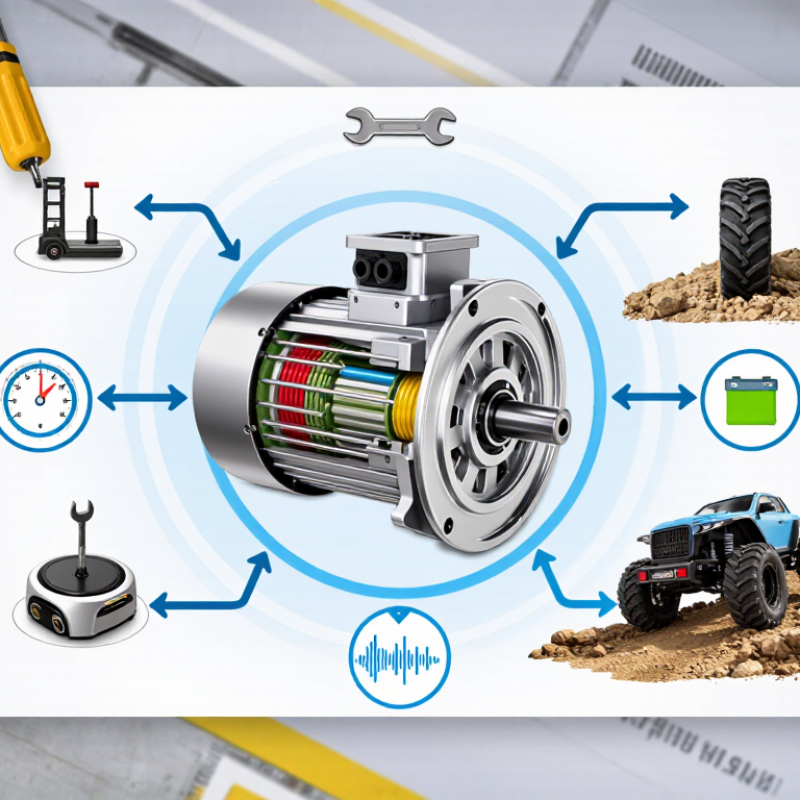
Wheel Motor Basics and Their Main Types
How to Choose the Right Wheel Motor in 2026?
A wheel motor places the drive unit inside, or beside, the wheel. It sends torque directly to the tire, reducing mechanical parts and allowing independent wheel control. The design also adds unsprung mass, which can affect suspension comfort and grip on rough roads. According to the International Energy Agency’s Global EV Outlook 2024, electric car sales approached 14 million in 2023 and were expected to exceed 17 million in 2024. That growth makes motor selection more technical, not simpler.
The main types are direct-drive hub motors, geared hub motors, and centralized e-axle systems. Direct-drive units are quiet and mechanically simple, but they can deliver less starting torque per kilogram. Geared motors improve torque density, although gears add noise, wear, and service needs. E-axles keep mass away from the wheel and usually support stronger thermal management. They may suit heavier vehicles better. Permanent-magnet motors offer high efficiency and compact packaging. Induction motors avoid permanent magnets but may lose efficiency under light loads. Switched-reluctance motors tolerate high temperatures, yet their noise and vibration require careful control.
Look beyond peak power. Check continuous torque, cooling performance, sealing, controller compatibility, and suspension limits. The U.S. Department of Energy reports that modern electric-drive systems can exceed 90% peak efficiency, but real efficiency changes with speed, temperature, and load. A common mistake is choosing from a headline rating alone. I would test the motor on the actual tire, road surface, and duty cycle. Laboratory figures can mislead.
How to Choose the Right Wheel Motor in 2026?
Wheel motors are selected mainly by required power, continuous torque, efficiency, speed, wheel size, operating voltage, cooling method, and available installation space. The chart compares representative midpoint values from commonly used engineering ranges; actual ratings vary by application and design.
Quick guide: Geared hub motors are compact and suitable for light vehicles. Direct-drive hub motors provide quieter operation and regenerative braking. High-torque permanent-magnet in-wheel motors suit heavier electric vehicles, while hydraulic wheel motors are preferred for high-load mobile machinery and low-speed applications.
Define Vehicle Requirements and Operating Conditions
Choosing a wheel motor begins with the vehicle, not the motor catalogue. Record curb mass, payload, axle load, wheel diameter, target speed, and maximum grade. A two-ton delivery vehicle climbing a wet 12% slope needs different torque from a light campus shuttle. Measure real routes when possible. Driver habits can distort estimates.
The IEA’s Global EV Outlook 2024 reports more than 14 million electric cars were sold globally in 2023. It also notes that electric SUVs represented about 48% of electric car sales. Greater vehicle mass increases launch torque, braking demand, and motor heat. Therefore, specify continuous torque separately from peak torque. Check whether the motor can sustain its rating during repeated starts, not only on a test bench.
Operating conditions deserve equal attention. Define daily mileage, stop frequency, road gradient, ambient temperature, water exposure, dust, and charging intervals. For example, a refuse vehicle may creep for hours, then brake repeatedly on a steep street. Regenerative braking must match battery acceptance and tire grip. The U.S. Department of Energy highlights rolling resistance and accessory loads as important efficiency factors. Wheel diameter also changes torque demand at the contact patch. Bigger wheels may improve clearance, but they can weaken low-speed acceleration.
Do not trust one simulation. A spreadsheet can still lie. Validate the selected motor on the heaviest route, during the hottest shift, with realistic payload. I would also leave thermal margin, although the exact margin depends on cooling design and duty cycle. That detail is often underestimated.
Check Safety, Durability, Maintenance, and Total Cost
How to Choose the Right Wheel Motor in 2026?
Check Safety, Durability, Maintenance, and Total Cost
Safety should guide every wheel motor decision. Match the motor’s rated load to the vehicle’s real working weight, including passengers, cargo, and slopes. Leave a practical safety margin. A motor that overheats on a long incline can lose power suddenly. Check braking response, thermal protection, cable insulation, and water resistance before comparing prices. Confirm that test results come from realistic operating conditions, not only laboratory figures.
Durability depends on more than a strong housing. Examine axle loading, bearing quality, sealing, vibration resistance, and the expected duty cycle. Mud, salt, and repeated curb impacts can expose weak points quickly. Ask how many service hours the motor supports and which parts can be replaced. Keep inspection access simple. A sealed unit sounds attractive, but difficult repairs may create higher costs later.
Maintenance should include connector checks, brake inspections, firmware updates, and unusual-noise monitoring. Record temperature and energy use during regular operation. Small changes often reveal wear early. I once underestimated downtime when comparing two motors with similar purchase prices. The cheaper option required more labor and replacement parts. Calculate the total cost across several years, including installation, energy, maintenance, training, and disposal. Recheck the calculation after real-world testing.
