What is a CNC Lathe Machine and How Does It Work?
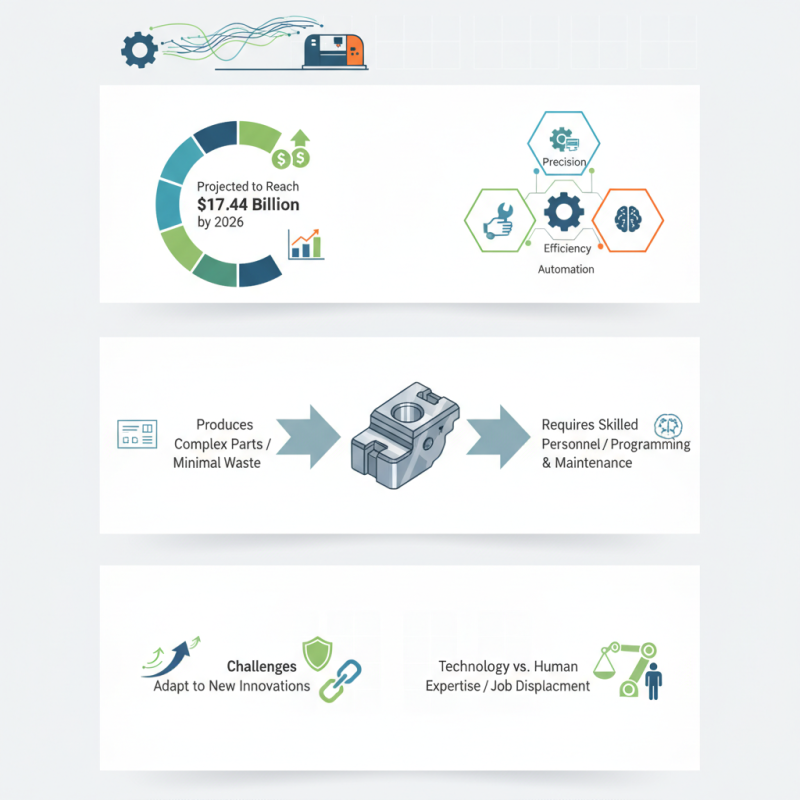
Cnc Lathe Machines have transformed the manufacturing landscape. According to a recent report by MarketsandMarkets, the CNC machine tools market is projected to reach $117.44 billion by 2026. This rapid growth highlights the significance of CNC lathe machines in various industries. These machines offer precision, efficiency, and automation, making them essential for modern production.
Manufacturers use CNC lathe machines for their ability to produce complex parts with minimal waste. Their advanced technology enables the machining of intricate shapes and sizes, which manual lathes cannot achieve. However, despite their advantages, operating a CNC lathe machine requires skilled personnel for programming and maintenance. There is a continuous need for training to keep pace with rapidly evolving technology.
Challenges in the industry also merit attention. A failure to adapt to new innovations can hinder a company's competitive advantage. Moreover, the reliance on CNC lathe machines raises concerns about job displacement for traditional machinists. As the industry evolves, striking a balance between technology and human expertise remains crucial.
What is a CNC Lathe Machine? Definition and Overview
A CNC lathe machine is a powerful tool used in manufacturing. It uses computer numerical control (CNC) to automate the process of shaping materials. This technology allows for high precision and repeatability, which is critical in today's production environments.
The CNC lathe rotates the workpiece against a stationary cutting tool. This setup can create cylindrical shapes, threads, and other complex features. Operators input designs into the machine, and it executes them with remarkable accuracy. However, the setup phase can be challenging. Alignment errors can lead to wasted materials or faulty components.
Understanding the machine's operation is essential for optimal use. Operators must regularly check tool wear and settings. Adjustments are sometimes necessary, even after extensive training. Continuous learning and adaptation are vital, as each job may present unique challenges. Balancing efficiency with quality often requires careful consideration and experience.
Components of a CNC Lathe Machine: Key Parts Explained
CNC lathe machines are essential tools in modern manufacturing. They are built with several key components that play vital roles. The main part is the spindle, which rotates the workpiece. This spinning allows for precise shaping and cutting. The feed mechanism controls the movement of the cutting tool, ensuring accuracy during the process. Operators must frequently check this part for wear and tear.
Another significant component is the tool holder. It securely holds the cutting tools in place. A loose tool can lead to errors and damaged workpieces. Additionally, the control panel is where operators set parameters like speed and depth. It requires a good understanding to operate effectively. Mistakes in settings can result in wasted materials and time.
The bed supports all the components. It needs to be sturdy and well-maintained. A wobbly bed can cause vibration during operation. This affects the quality of the finished product. Regular maintenance and inspection are crucial for efficiency. Recognizing these key components helps in understanding CNC lathe functioning better. It's a blend of technology and craftsmanship that requires attention to detail.
CNC Lathe Machine Components and Their Importance
How CNC Lathe Machines Operate: Step-by-Step Process
CNC lathe machines are crucial in the manufacturing sector. They transform raw materials into precise components through a fascinating process. Understanding how they operate helps appreciate their significance.
The operation of a CNC lathe starts with programming. A technician inputs a design into the machine's software. This step requires attention to detail. If the programming is flawed, the final product will be compromised. Once programmed, the machine clamps the raw material, usually metal or plastic. The spindle then spins the material rapidly. This spinning is essential for shaping.
Next, the cutting tool comes into play. It moves along the material, guided by the CNC system. This movement is precise but can lead to errors if not monitored. Operators must remain vigilant. Chips of material are generated as the tool cuts away excess. A coolant often circulates to keep the workpiece from overheating. Throughout this process, quality checks are vital. Any misalignment can mean losing hours of work. The challenge is to maintain accuracy while ensuring efficiency.
Applications of CNC Lathes in Various Industries: Statistics and Trends
CNC lathes play a crucial role in various industries, including automotive and aerospace. According to a recent report by MarketsandMarkets, the global CNC lathe machine market is expected to reach $5.5 billion by 2025, growing at a CAGR of over 6%. This reflects the increasing demand for precision components.
In the automotive sector, CNC lathes are essential for manufacturing parts like shafts and bearings. Statistics show that around 25% of CNC lathe usage is dominated by this industry. However, challenges remain. High costs and the need for skilled operators can hinder growth. Many companies struggle to balance demand with available resources.
The aerospace industry is also leveraging CNC lathes for parts that require tight tolerances. With an expected growth rate of 8% in this sector, the need for advanced technologies is evident. Yet, the steep learning curve for new operators can lead to inefficiencies and errors. This highlights the need for better training programs and investment in human capital.
Advantages of CNC Machining: Precision, Efficiency, and Cost-effectiveness
CNC machining has transformed the manufacturing landscape. This technology offers unmatched precision, efficiency, and cost-effectiveness. According to a recent industry report, CNC machines can achieve a tolerance of ±0.001 inches. This level of precision is crucial for industries like aerospace and automotive, where even minor deviations can lead to significant failures.
Efficiency is another major advantage. CNC lathes run continuously without interruption. The average CNC machine operates at a speed that is two to three times faster than manual lathes. This increase in production speed can boost output dramatically. However, setting up a CNC machine is still a complex task. Operators need training to maximize machine potential effectively.
Cost-effectiveness is vital in competitive markets. Investing in CNC technology can reduce labor costs by up to 50%. Nonetheless, the initial investment can be daunting for small businesses. Regular maintenance is essential to avoid unexpected shutdowns. Ignoring this can lead to costly repairs. As companies embrace CNC machining, they must continuously evaluate operational efficiency to remain competitive.
What is a CNC Lathe Machine and How Does It Work?
| Feature | Description | Advantages |
| Precision | CNC lathes provide high levels of accuracy in machining parts, ensuring tight tolerances are met. | Improved product quality and reduced material waste. |
| Efficiency | Automated machining processes allow for uninterrupted operation and faster production rates. | Lower production time and capability to operate 24/7. |
| Cost-Effectiveness | Although initial investments may be high, CNC lathes reduce labor costs and material waste. | Long-term savings and increased profitability. |
| Versatility | CNC lathes can create a wide variety of shapes and components across multiple materials. | Ability to work on diverse projects and adapt to different requirements. |
| Safety | CNC machining reduces the need for manual handling and increases operator safety. | Minimized risk of accidents and injuries. |
