Skip to content

What Is a Mud Pump Piston Used For?

A mud pump works through steady, forceful reciprocation, pushing drilling fluid down the drill string and back toward the surface. The Mud Pump Piston is the moving component that helps create this flow. Inside the pump, it travels through a liner, drawing fluid into the chamber on one stroke and forcing it out on the next. The pressure is not abstract: it moves dense mud through pipes, carries drilled cuttings upward, and supports circulation around the drill bit. Small part. Essential job.

A piston’s seal against the liner matters. If it wears, fluid can leak past it, reducing pressure and making pump performance less consistent. Pistons may use rubber or polyurethane sealing elements, but the right choice depends on fluid chemistry, temperature, pressure, and operating conditions. There is no single option for every rig. During inspection, technicians can look for damaged sealing surfaces, uneven wear, or signs of leakage, while also checking the liner and related components. It is tempting to blame the piston whenever pressure drops, but that can miss other causes, such as valve or liner wear. A careful diagnosis is more reliable. This overview explains what a Mud Pump Piston does, how it contributes to fluid circulation, and why material selection and routine inspection matter. One detail can change the picture: service life depends on the whole pump system, not the piston alone.
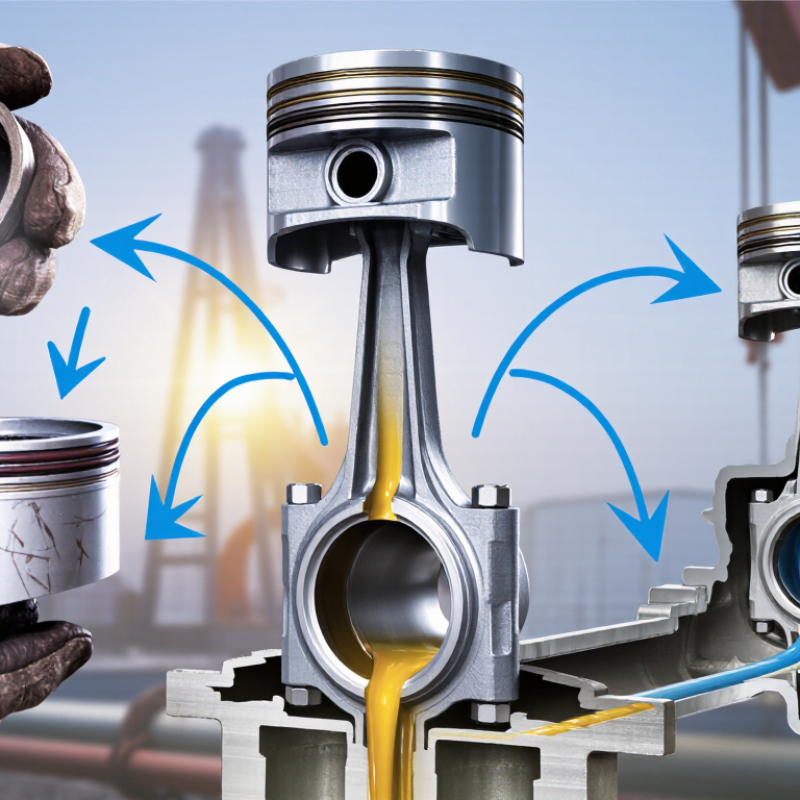
What Is a Mud Pump Piston Used For?

What a Mud Pump Piston Is

A mud pump piston is the reciprocating part that helps move drilling fluid through a rig’s circulation system. It sits inside a replaceable liner in the pump’s fluid end. As the piston moves back, inlet valves open and fluid enters the chamber. On the forward stroke, those valves close and discharge valves open, sending fluid into the drill string. The piston’s seal matters: worn or damaged sealing surfaces can reduce pressure and allow leakage. Abrasive solids in drilling mud make wear a practical concern, not just a maintenance detail.

API Specification 7K covers drilling and well-servicing equipment, including mud pumps; API Recommended Practice 13D addresses drilling-fluid hydraulics. Together, they provide useful context for understanding the piston’s operating environment. Pump displacement can be estimated from piston area multiplied by stroke length. For example, a single-acting piston with a six-inch diameter and a 12-inch stroke displaces about 339 cubic inches per stroke, before leakage and other losses. That figure is a geometry-based example, not a guaranteed pump output. Actual delivery also depends on pump configuration, speed, valve condition, and fluid properties. The number can look precise. It still needs context. A technician checking a unit should compare measured pressure and fluid output with its service records and operating limits.

Where the Piston Fits in a Mud Pump

In a reciprocating mud pump, the piston sits inside the fluid end, moving within a replaceable liner. It connects to the piston rod, which carries motion from the pump’s power end. The crankshaft and connecting rods turn rotation into a steady back-and-forth stroke. That small movement does the hard work.

As the piston retracts, pressure falls and the inlet valve opens, drawing drilling fluid into the chamber. As it advances, the inlet valve closes and the outlet valve opens, pushing fluid into the discharge line. The piston does not work alone: the liner provides its running surface, while the valves direct flow. Not glamorous, but essential.

A close fit between piston and liner helps maintain pressure. Wear, grit, or heat can damage the sealing surface, causing leakage and reduced output. During inspection, crews check for uneven wear and follow the pump maker’s clearance and replacement guidance. Details vary between pump designs, so a familiar repair routine may not fit every unit. That is easy to overlook.

What Is a Mud Pump Piston Used For? - Where the Piston Fits in a Mud Pump

Component or detail Where it fits Role in pumping Practical note
Mud pump piston Inside the fluid-end cylinder, moving within the pump liner. Reciprocates in the liner to displace drilling fluid and create the pressure and flow needed to circulate mud. Its sealing surfaces wear over time; fluid leakage or reduced pressure can indicate wear or damage.
Pump liner Sleeve fitted in the fluid-end cylinder around the piston. Provides the surface against which the piston moves and seals, forming the working chamber. The liner and piston must be compatible in size and condition for effective sealing and service life.
Piston rod and rod connection Connect the piston to the pump’s mechanical drive through the rod assembly. Transmit the drive’s reciprocating motion to the piston. A secure connection and correctly aligned moving parts help prevent abnormal wear.
Suction valve In the fluid end, between the inlet manifold and the pumping chamber. Opens to admit drilling fluid as the piston moves away and chamber pressure falls; closes as pressure rises. A valve that does not seat properly can reduce pump performance and cause fluid to flow backward.
Discharge valve In the fluid end, between the pumping chamber and the discharge manifold. Opens when chamber pressure exceeds discharge pressure, allowing fluid to leave the pump. Together, the suction and discharge valves direct flow through the pump in one direction.
Suction stroke One half of the piston’s reciprocating cycle. The piston moves away from the fluid end, chamber volume increases, and fluid enters through the suction valve. The discharge valve remains closed during normal operation on this stroke.
Discharge stroke The return half of the piston’s reciprocating cycle. The piston moves toward the fluid end, chamber volume decreases, and fluid is forced through the discharge valve. The suction valve remains closed during normal operation on this stroke.
Piston material and service The piston’s sealing element contacts the liner while the pump is operating. The sealing element helps limit fluid bypass around the piston so the pump can build pressure. Material selection depends on the drilling fluid and operating conditions; inspect and replace parts according to service requirements.

How the Piston Moves Drilling Fluid

A mud pump piston converts a rotating crank’s motion into a repeated push-pull movement. On the return stroke, it draws drilling fluid through the suction valve. On the power stroke, it drives fluid through the discharge valve and into the drill string. That is the push. The fluid carries cuttings upward through the annulus while helping cool the bit and balance underground pressure. The piston’s seals matter: worn rubber can let fluid slip past, reducing flow and making pressure less steady.

The volume moved depends on piston area and stroke length. For example, a six-inch piston with a 12-inch stroke displaces about 339 cubic inches, or 1.47 gallons, per power stroke before losses. This is a geometric estimate, not a guaranteed field rate. Valve response, fluid compressibility, and seal wear reduce actual delivery. API Recommended Practice 13D provides the rheology and hydraulics framework used to assess how drilling-fluid properties affect circulation. API Specification 7K addresses drilling equipment, including mud pumps. Together, these references explain why piston movement alone does not determine flow: fluid properties and equipment condition matter, too. The estimate is imperfect, but useful for understanding the mechanism.

What Is a Mud Pump Piston Used For?

The piston reciprocates inside the pump cylinder, changing its volume to move drilling fluid. Suction and discharge valves direct fluid into and out of the cylinder.

This idealized waveform uses a simple-harmonic approximation: the piston travels from one end of its stroke to the other and back during one 360° crankshaft revolution. Actual motion depends on the pump’s crank and connecting-rod geometry.

What the Piston Does During Each Pumping Cycle

A mud-pump piston moves drilling fluid by sliding inside a close-fitting liner. On the suction stroke, the piston pulls back, pressure in the cylinder drops, and the inlet valve opens. Fluid enters the chamber. On the power stroke, the piston advances, the inlet valve closes, and the outlet valve opens. The piston then pushes fluid into the discharge line. Small changes in seal condition matter: worn rubber can let fluid slip past the piston and reduce pressure.

A common triplex, single-acting pump has three pistons, producing three discharge strokes per crankshaft revolution. Pump output depends on piston area, stroke length, and strokes per minute; crews monitor these values alongside discharge pressure. API Specification 7K covers drilling and well-servicing equipment, including mud-pump equipment, while the IADC Drilling Manual provides practical drilling-equipment guidance. Neither gives every rig a universal piston-life figure, because abrasive solids, pressure, and operating practice vary. That limitation is easy to overlook. A rising liner temperature or uneven pressure reading may signal trouble, but neither proves piston failure alone. Check valve condition and fluid properties before changing the piston.

How Piston Design Affects Pressure and Wear

A mud pump piston moves inside a liner to push drilling fluid through the pump and into the circulation system. Its seal must hold against high pressure while sliding repeatedly across the liner. Small design details matter. The piston’s lip shape, rubber compound, and fit all affect how well it seals and how quickly it wears.

A tight fit can reduce leakage and help maintain steady pressure, but it may also increase friction and heat. A flexible sealing lip can follow minor liner irregularities, while a tougher compound may better resist abrasive particles. Neither choice is perfect. Hard solids can score the liner, and heat can weaken some elastomers over time. Pressure changes add another strain: each stroke flexes the sealing edge, sometimes unevenly. That trade-off is easy to underestimate.

In the field, wear often shows up as falling discharge pressure, fluid leakage, or a roughened piston surface. Check the piston and liner together; replacing one without examining the other can shorten service life. Match the piston design to the fluid, operating pressure, temperature, and liner condition, using equipment specifications as the guide. A clean-looking piston may still have lost its sealing shape. Inspection tells part of the story, not all of it.

Article Source:

Back To Top