
Skip to content

10 Best S83 Pneumatic Air Leg Rock Drills Buyers Guide

Choosing the right S83 Pneumatic Air Leg Rock Drill requires more than comparing prices and advertised drilling speed. This buyer’s guide examines practical details that affect daily work underground, in tunnels, and on hard rock faces. Air consumption, impact energy, leg stability, weight, maintenance access, and operator control all deserve careful attention.

Mining equipment specialist Dr. Elena Marquez states, “A drill’s value appears at the rock face, not on the specification sheet.” Her observation reflects field reality. A compact drill may feel manageable during a short test, yet become tiring after several hours. A powerful model may penetrate quickly, but demand a larger compressor and stronger hose connections. Small differences matter.

This guide compares ten widely considered S83 pneumatic air leg rock drill options through a buyer-focused lens. It considers feed-leg travel, typical working pressure, bit compatibility, vibration, noise, spare-part availability, and service support. Readers should confirm every specification with the manufacturer. Product versions can change.

Look closely.

Inspect the chuck, throttle, water-feed connection, and air inlet. Check whether the leg extends smoothly without sudden movement. Examine the handle position while wearing gloves. These details can reveal more than polished product photographs.

Some ratings may appear impressive but lack operating context. That is worth questioning. Actual results depend on rock hardness, bit condition, lubrication, air quality, and technician skill. This guide cannot replace a site trial or a qualified safety assessment. It can, however, make the shortlist clearer and expose the compromises behind each purchase.
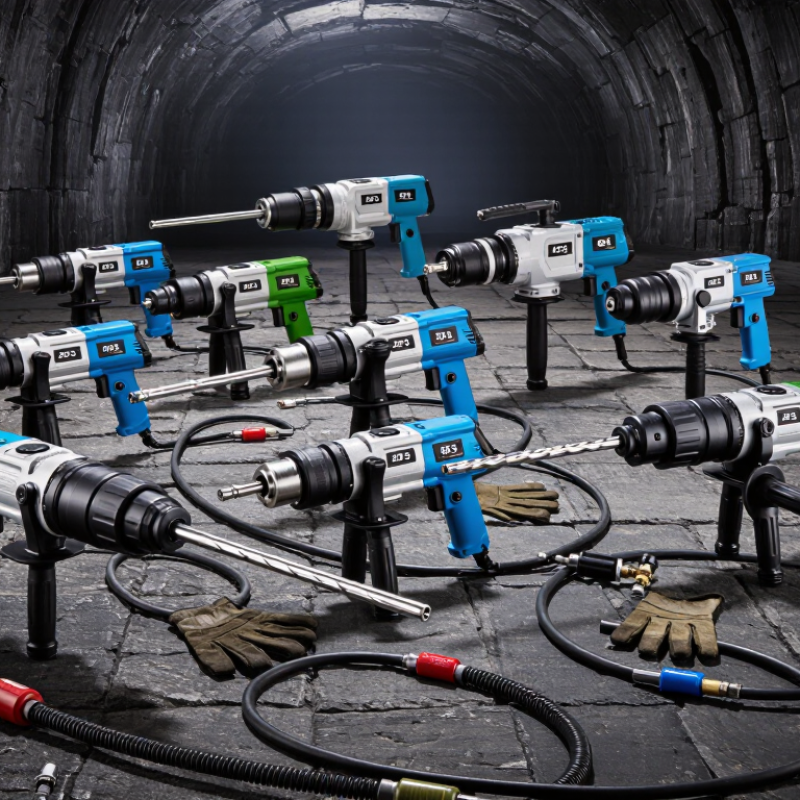
10 Best S83 Pneumatic Air Leg Rock Drills Buyers Guide

S83 Pneumatic Air Leg Rock Drills: Purpose, Design, and Operating Principles

An S83 pneumatic air leg rock drill is designed for directional drilling in hard rock, especially underground headings and quarry faces. Its air leg supports the tool against the wall, floor, or roof. Compressed air drives a piston, while a separate rotation mechanism turns the drill steel. The bit strikes, rotates, and fractures the rock in repeated cycles.

Its practical value depends on more than impact force. Air pressure, water flushing, feed control, and hose size shape real drilling output. The S83 label can cover different specifications, so buyers should verify the manual. NIOSH mining research links respirable silica exposure with drilling dust, while OSHA sets an eight-hour silica exposure limit of 50 micrograms per cubic meter. Wet flushing is not optional in dusty faces. It also helps clear cuttings from the hole.

Tips: Check operating pressure at the drill, not only at the compressor. Keep the air leg aligned with the hole. Excessive feed force can stall rotation and damage the bit. NIOSH recommends controlling occupational noise near 85 dBA over eight hours; hearing protection still matters. In field use, operators often focus on penetration speed and neglect vibration. That is a mistake, perhaps an understandable one. Inspect couplings, valves, and the water line before each shift. Performance figures from industry reports are useful, but local rock hardness can make them look overly optimistic.

S83 Pneumatic Air Leg Rock Drills: Purpose, Design, and Operating Principles

The S83 pneumatic air-leg rock drill is designed for drilling blast holes in hard rock. Compressed air drives a reciprocating piston, while the air leg supports the drill and provides forward feed force.

Typical S83-class dimensional specifications. The drilling diameter is shown as a range; the remaining values are representative fixed dimensions.

Working pressure0.40–0.63 MPa
Impact frequencyApproximately 35 Hz
Air consumptionUp to 55 L/s
Operating principleCompressed-air piston impact with air-leg feed

Key Specifications to Compare When Choosing an S83 Rock Drill

When comparing an S83 pneumatic air leg rock drill, start with operating pressure and air consumption. Many underground systems use about 0.63 MPa compressed air, but actual pressure can fall at the hose. Check performance at the drill, not only at the compressor. Compare impact frequency, torque, drilling speed, and air volume under identical test conditions. ISO 28927-10 recommends standardized vibration measurement for handheld rock drills, making test data more useful than sales claims.

Weight matters underground. A lighter drill can reduce operator fatigue, yet excessive lightness may weaken stability during hard-rock drilling. Review the drill’s mass, leg extension range, shank size, and feed force together. The hose should also match the required airflow; a narrow or damaged hose quietly reduces output. It is an easy detail to miss.

Noise and vibration deserve serious attention. NIOSH’s occupational noise criteria identifies 85 dBA over eight hours as a recommended exposure limit, using a 3 dB exchange rate. Ask for measured sound and vibration values, then confirm local workplace requirements. Field experience shows that lubrication quality changes starting performance and service life, sometimes more than expected. Inspect the oiler, water-control arrangement, spare-part access, and maintenance intervals. I would also question any laboratory result without test rock, bit diameter, and air-line length. Real headings are rarely perfect.

How to Evaluate Air Legs, Drill Bits, and Supporting Components

Choosing among the 10 best S83 pneumatic air leg rock drills requires more than comparing prices. The air leg controls drilling stability, operator posture, and feed pressure. Measure its full extension, retraction speed, and load response before purchase. A reliable leg should move smoothly without sudden jerks. Inspect the cylinder, seals, valves, and mounting joints for scoring or leakage. I have found that small air leaks can make a capable drill feel weak. My first checklist ignored hose length, which was a costly mistake.

Drill bits deserve equal attention. Match the bit shank and diameter to the S83 chuck and intended rock condition. Inspect carbide tips for uneven wear, cracks, or rounded edges. A blunt bit increases vibration and slows penetration. Use suitable flushing to clear cuttings from the hole. In wet or abrasive formations, bit wear may appear sooner than expected. Keep spare bits available, but do not assume every spare fits correctly.

Supporting components often decide whether the system performs consistently. Check couplings, filters, lubricators, pressure regulators, and air hoses as one working system. The hose should resist crushing and retain flexibility near bends. A clogged filter can reduce feed force without obvious warning. Confirm that controls are easy to reach while wearing gloves. Record pressure readings during a real drilling trial, not only on a workbench. Field conditions are less forgiving. Recheck the setup after several operating hours, because early assumptions are often incomplete.

Safety Standards and Proper Operating Practices for S83 Drills

An S83 pneumatic air leg rock drill demands more than strength and experience. It requires controlled air pressure, stable footing, and disciplined inspection. Before work begins, check the drill body, air leg, chuck, retainer, and exhaust openings. Look for cracked fittings, damaged threads, and loose fasteners. Never use a damaged hose. Secure each coupling with a suitable safety clip and keep the hose away from sharp rock edges.

Wear a hard hat, eye protection, hearing protection, gloves, safety boots, and suitable respiratory protection. Rock dust can remain suspended after drilling stops. Confirm ventilation and dust control before starting.

Set the air leg firmly against the working surface, then test it at low pressure. Keep both hands on the controls. Do not stand directly behind the drill or place any part of your body near the bit. Follow the operating pressure and lubrication requirements in the equipment manual.

Stop immediately if the drill vibrates unusually, loses feed control, or produces an unfamiliar sound. Small changes matter. I have seen operators ignore a loose connection because production felt urgent. That decision can turn a minor fault into a serious injury. A checklist helps, but it is not perfect; rushed inspections still miss worn seals and hidden hose damage. After shutdown, isolate the air supply, release trapped pressure, and inspect the bit before moving the machine. Training should include supervised practice, emergency response, and regular review of site-specific hazards.

Maintenance Requirements and Buyer Selection Considerations

Maintenance Requirements and Buyer Selection Considerations

An S83 pneumatic air leg rock drill needs clean, dry air and steady lubrication. Drain the receiver daily, inspect the airline filter, and check hose couplings for leaks. The U.S. Department of Energy’s Compressed Air Sourcebook reports that leaks can waste 20–30% of compressor output. A small hiss is not harmless. Inspect the drill steel, shank, piston, and leg joints after each shift. Replace damaged seals before air loss causes unstable drilling. Keep a written log of lubrication, vibration, and worn components. It feels basic, but skipped records often hide repeat failures.

Selection should begin with working conditions, not catalogue claims. Confirm air consumption, operating pressure, feed length, drill angle, and compatible shank dimensions. The drill must match the compressor’s actual delivered flow, not its advertised capacity. NIOSH recommends limiting occupational noise exposure to 85 dBA over eight hours. Therefore, buyers should request measured sound and vibration data, preferably tested under ISO 28927 procedures. Lower weight may improve handling, yet an overly light body can increase recoil and fatigue. That trade-off deserves field testing.

Ask for service intervals, seal-kit availability, repair training, and documented test results. Examine the air leg with gloves: loose pins, bent tubes, or uneven extension are warning signs. Selection guides often overlook water quality and hose length. That is a mistake. Longer hoses can reduce pressure at the drill, especially during simultaneous operation. A practical trial should record penetration rate, air use, operator fatigue, and maintenance time. No product is perfect; real rock conditions can expose assumptions quickly.

10 Best S83 Pneumatic Air Leg Rock Drills Buyers Guide - Maintenance Requirements and Buyer Selection Considerations

No. Recommended S83 Drill Profile Typical Application Typical Hole Diameter Typical Drilling Depth Air Pressure Air Consumption Approx. Drill Weight Key Maintenance Requirement Buyer Selection Priority
1 Standard underground S83 air-leg drill Development headings, roof holes and general mine drilling 34–42 mm Up to approximately 5 m 0.50–0.63 MPa 70–90 L/s 45–55 kg Lubricate the air line continuously and drain the filter or water separator daily. Choose a configuration matching the mine’s available compressor capacity.
2 Long-hole S83 configuration Longer horizontal or inclined holes in confined underground areas 32–40 mm 3–5 m per rod setup 0.50–0.63 MPa 70–90 L/s 45–55 kg Inspect the chuck, rotation sleeve and drill-steel alignment every shift. Prioritize stable air-leg feed control and compatibility with extension rods.
3 Water-flushing S83 configuration Hard-rock drilling where dust suppression and hole cleaning are required 34–42 mm Up to approximately 5 m 0.50–0.63 MPa 70–90 L/s 45–55 kg Flush the water passage after use and inspect seals for leakage before storage. Confirm water-inlet thread, flushing method and corrosion-resistant internal parts.
4 Dry-drilling S83 configuration Short-term surface work where water is unavailable 32–40 mm 2–4 m 0.50–0.63 MPa 70–90 L/s 45–55 kg Use approved dust-control equipment and clean the exhaust muffler frequently. Do not select dry drilling for enclosed areas without effective ventilation and dust control.
5 High-feed-force S83 air-leg setup Inclined drilling and operations requiring stronger bit contact 34–42 mm Up to approximately 5 m 0.50–0.63 MPa 70–90 L/s 45–55 kg Check air-leg seals, piston rod wear and feed-cylinder smoothness at least weekly. Select an air leg with sufficient stroke, thrust and secure locking performance.
6 Portable S83 setup for field work Construction anchoring, small quarry jobs and emergency drilling 30–38 mm 1.5–3 m 0.50–0.63 MPa 70–90 L/s 45–55 kg Clean and oil the drill before transport; protect hoses and couplings from impact. Consider carrying handles, hose length, transport weight and field-service access.
7 S83 setup for hard abrasive rock Granite, quartz-rich rock and other abrasive formations 32–40 mm 2–5 m 0.50–0.63 MPa 70–90 L/s 45–55 kg Inspect piston, rifle bar, rotation parts and chuck splines for accelerated wear. Match the drill to suitable carbide bits and use correctly hardened drill steel.
8 Low-temperature service S83 setup Cold-climate mining, tunneling and seasonal outdoor work 34–42 mm Up to approximately 5 m 0.50–0.63 MPa 70–90 L/s 45–55 kg Drain condensed moisture after each shift and use lubricant rated for the operating temperature. Verify seal material, lubricant temperature range and protection against frozen water.
9 High-utilization production S83 setup Multiple shifts, repeated drilling cycles and demanding production schedules 34–42 mm 2–5 m 0.50–0.63 MPa 70–90 L/s 45–55 kg Follow a planned inspection cycle and replace worn seals, springs and valves before failure. Evaluate spare-part availability, service documentation and total operating cost.
10 Versatile replacement or backup S83 setup Mixed rock conditions, maintenance backup and general-purpose use 32–42 mm 2–5 m 0.50–0.63 MPa 70–90 L/s 45–55 kg Perform a complete pre-use inspection: hoses, fittings, lubrication, rotation and air-leg movement. Select the most compatible shank, hose connections and service parts already used on site.
Technical note: The figures above represent typical S83-class pneumatic air-leg rock-drill ranges. Actual performance depends on drill configuration, rock hardness, drill-steel size, bit design, hose diameter, air-line length, compressor output and operating technique. Confirm the manufacturer’s nameplate and service manual before purchase or operation. A practical installation normally requires clean compressed air, an in-line lubricator, a water separator, correctly sized hoses and a regulated supply pressure.
Back To Top