Skip to content

China Top 10 Hydraulic Coupler Manufacturers

China’s hydraulic sector serves construction, agriculture, mining, transport, and industrial equipment markets. This guide introduces ten Chinese manufacturers of Hydraulic Couplers, focusing on product range, application fit, materials, and quality controls. A useful principle, paraphrased from hydraulic-control scholar H. E. Merritt’s work, is that connection performance depends on the system around it. That matters in practice. A coupler may look robust on a bench, yet leak after repeated pressure cycles or exposure to dust.

Readers should compare more than catalog claims. Check operating pressure, flow capacity, connection standards, seal materials, and interchangeability. Ask how each supplier tests leakage, durability, and batch consistency. A clear datasheet and traceable test records are more useful than broad claims of “premium quality.” Small details matter. Thread dimensions, surface finish, and seal compatibility can affect installation time and service life.

The manufacturers in this overview are presented as candidates for further evaluation, not as a universal ranking. Supplier capabilities, product lines, and export services can change. Some details may also be difficult to verify from public information alone. That is worth keeping in mind. Buyers should confirm current specifications, request samples where appropriate, and assess support for their equipment and operating conditions. The right choice is rarely the most impressive brochure; it is the coupler that performs reliably in the actual system.
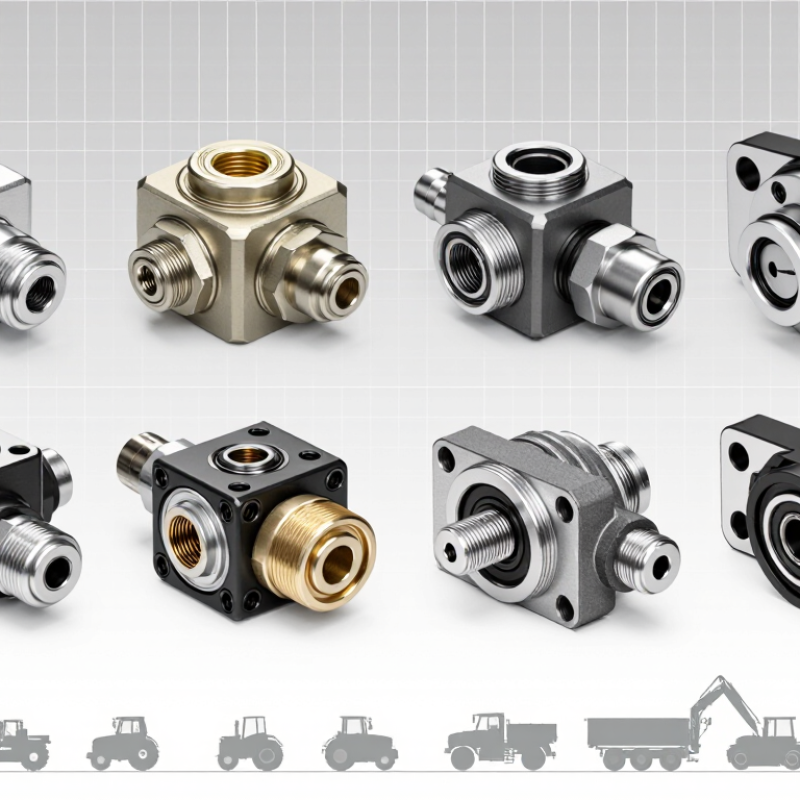
China Top 10 Hydraulic Coupler Manufacturers

What Hydraulic Couplers Are and How They Work

A hydraulic coupler joins a hose or tool to a pressurized circuit, allowing fluid to pass when connected and helping contain it when separated. In a common quick-connect design, a spring-loaded valve opens as the two halves engage. The operator may hear a click, but that sound alone does not confirm a secure, leak-free connection. Flat-face couplers reduce fluid spillage during disconnection; ISO 16028 specifies requirements for this coupling type, while ISO 7241 covers two interchangeable series, A and B. Check the coupling’s pressure rating and compatibility with the machine before use.

The connection is small. Its job is not. Dirt on a sealing face can score the seal, while trapped pressure can prevent connection or cause a sudden release. Clean both faces, relieve system pressure as instructed, and inspect for damaged seals. Grand View Research’s hydraulic-hose market report estimated the global market at about US$10.7 billion in 2023, reflecting the scale of equipment that depends on reliable fluid connections; this is hose-market data, not a coupler-market estimate. A coupler can look sound and still leak under load. That is easy to miss. ISO specifications help define interchangeability, but they do not replace checking the actual working pressure, fluid, temperature, and maintenance history.

China’s Hydraulic Coupler Industry and Manufacturing Landscape

China’s hydraulic coupler industry is supported by a wide manufacturing base, from precision machining and surface treatment to seal installation and final testing. Manufacturers may specialize in quick-connect designs, threaded fittings, or couplers for specific pressure ranges. The capabilities vary. A supplier’s location alone cannot confirm its production quality or delivery reliability.

Tips: Ask for pressure-test records, material specifications, and dimensional inspection results. Confirm that samples match the intended hose, fluid, and operating conditions. Small details matter.

When comparing China’s top hydraulic coupler manufacturers, assess process control alongside price. Look for consistent thread dimensions, clean sealing surfaces, and clear traceability between components and test records. Factory visits can show how parts move through machining, cleaning, assembly, and inspection. Yet a polished production line is not proof of long-term field performance. That part is easy to overestimate. Request sample testing and discuss failure handling before placing a large order.

China Top 10 Hydraulic Coupler Manufacturers - China’s Hydraulic Coupler Industry and Manufacturing Landscape

A non-ranked overview of ten hydraulic-coupler product segments commonly served by manufacturers in China.

Product Segment Reference Standard or Interface Typical Design Characteristics Common Materials Typical Applications
Industrial Quick Couplers — Series A ISO 7241-1, Series A Interchangeable quick-action coupling profile; available in multiple sizes and pressure ratings. Carbon steel; stainless steel options General industrial hydraulics, mobile equipment, and fluid-power circuits
Industrial quick couplers — Series B ISO 7241-1, Series B Quick-action coupling profile used where compatibility with the Series B interface is required. Carbon steel; stainless steel options Industrial machinery, agricultural equipment, and hydraulic service connections
Flat-face couplers ISO 16028 Flat mating faces help reduce fluid loss and dirt entry during connection and disconnection. Carbon steel; stainless steel options Construction machinery, forestry equipment, and other mobile hydraulics
Agricultural quick couplers ISO 5675 Designed for hydraulic connections used with agricultural tractors and machinery; verify the required interface before interchange. Carbon steel; protective plated finishes are common Tractors, agricultural implements, and farm machinery
Screw-to-connect couplers ISO 14541 Threaded connection helps resist accidental disconnection and is suited to demanding hydraulic service. Carbon steel; stainless steel options Heavy-duty mobile equipment and industrial hydraulic systems
Push-pull couplers Interface varies by design; check the specified profile and dimensions Connects and disconnects through a push-pull operation; some designs allow connection at an implement or bulkhead. Carbon steel; stainless steel options Tractors, implements, and equipment requiring frequent hose changes
High-pressure threaded couplers Product-specific interface; confirm pressure rating and mating dimensions Threaded locking design intended for applications where operating pressure and mechanical retention are important. High-strength carbon steel; stainless steel options Construction, mining, and other high-pressure hydraulic applications
Low-spill and dry-break couplers Design-specific; confirm compatibility with the intended system Valve arrangements are designed to limit fluid loss and air inclusion during disconnection; performance depends on the design. Carbon steel; stainless steel options Fluid-transfer systems, mobile machinery, and applications requiring cleaner disconnection
Hydraulic diagnostic test couplings ISO 15171-1 for applicable test-point interfaces Provides a connection point for pressure measurement and hydraulic-system diagnostics. Carbon steel; stainless steel options Pressure testing, system maintenance, and machine diagnostics
Multi-coupler assemblies Assembly-specific; connector profiles and layout are selected for the application Combines multiple hydraulic connections in a plate or grouped assembly to speed up simultaneous connection. Steel coupling bodies and mounting plates; material varies by design Attachments, agricultural implements, and machinery with multiple hydraulic lines

Note: This table describes product segments, not a ranked list of ten individual manufacturers. Standards, materials, pressure limits, and interchangeability depend on the specific product; confirm the manufacturer’s technical documentation before selection.

How to Evaluate Chinese Hydraulic Coupler Manufacturers

Evaluating China’s hydraulic coupler manufacturers takes more than comparing unit prices. Start with the working conditions: fluid type, pressure range, temperature, flow rate, and connection standard. A capable supplier should explain its test methods and provide material and dimensional specifications. Ask for inspection records, sample parts, and traceable batch information. Details matter.

Check machining consistency, sealing surfaces, thread quality, and corrosion protection. Request a sample and compare it with your hose and equipment before approving a large order. Discuss production capacity, lead times, packaging, and how defects are handled. Verify claims with documents and physical samples. Price alone can mislead. A low quote may exclude testing or tighter tolerances, though elaborate paperwork is not proof of reliable production either.

Tips: Send each candidate the same drawing and test requirements. Compare written responses, not promises. Record sample dimensions and leak-test results. Keep one uncertainty on your checklist: field conditions can reveal issues that a bench test misses.

Profiles of 10 Leading Hydraulic Coupler Manufacturers in China

China’s hydraulic coupler manufacturers serve agricultural machinery, construction equipment, factory systems, and mobile hydraulics. A useful comparison of ten supplier profiles should look beyond catalog breadth. Check pressure ratings, flow capacity, materials, seal options, interchange dimensions, and test documentation. Small details matter. A coupler that fits on paper may still leak under vibration or repeated connection cycles.

The profiles can show different strengths: precision machining, compact designs, high-pressure assemblies, corrosion-resistant materials, agricultural applications, mobile equipment, custom interfaces, OEM production, export support, and broad interchange options. These are capability areas, not a ranking.

Grand View Research valued the global hydraulic equipment market at USD 44.2 billion in 2023 and forecast 5.1% annual growth from 2024 to 2030. That figure covers hydraulic equipment broadly, not couplers alone, but it signals a substantial industrial market.

For practical evaluation, request pressure-cycle results, cleanliness controls, dimensional tolerances, and material specifications. Compare samples using the same hose, fluid, and operating pressure. Ask how suppliers handle seal wear and batch traceability. A polished datasheet helps, but it cannot replace field testing. Supplier profiles should also explain where evidence is limited; this is easy to overlook.

Comparing Products, Applications, and Manufacturer Capabilities

China Top 10 Hydraulic Coupler Manufacturers
Comparing Products, Applications, and Manufacturer Capabilities

Hydraulic couplers can look similar in a catalog, yet small design choices affect field performance. Compare connection style, rated pressure, flow capacity, and pressure drop against the machine’s actual duty cycle. A compact flat-face coupling may limit fluid loss during connection, while a threaded design may suit equipment exposed to vibration. Neither is automatically better. Seal materials, surface treatment, and contamination control also matter, especially in dust, cold, or repeated washdowns. Ask for dimensional drawings and test data, not just a headline pressure rating.

Applications help distinguish capable manufacturers from polished sales presentations. Excavators, agricultural implements, mining equipment, and factory lines place different demands on flow, impact, and service intervals. Check whether a supplier can maintain tolerances across batches, trace materials, and provide replacement seals or repair guidance. Production scale matters, but so does engineering support when a prototype leaks after several hundred cycles. Field checks matter. A clean test rig does not recreate a muddy jobsite. For a China-based top-ten comparison, assess certifications, sample inspections, lead-time records, and after-sales response. Rankings alone can hide gaps between a standard catalog and a coupler designed for specific operating conditions.

Hydraulic Quick Couplers: Typical Applications by Coupling Style

A qualitative selection overview of common coupler styles and application contexts—not a market-share or manufacturer ranking.

A value of 1 indicates a commonly encountered application association; 0 means the chart does not highlight that association. Actual suitability depends on the specific product, pressure rating, fluid, temperature, and connection requirements. Confirm specifications with the manufacturer.

Back To Top