Skip to content

Top 10 String Wound Filter Cartridges for Global Buyers

Choosing the right String Wound Filter Cartridges can affect water clarity, equipment life, and maintenance costs. Global buyers often compare ten products before approving one for production.

This guide examines the Top 10 String Wound Filter Cartridges for Global Buyers. It focuses on practical details, not attractive packaging. Each cartridge should be assessed by filtration rating, string material, core construction, length, diameter, and chemical compatibility. A cartridge marked at 5 microns may perform differently under real flow conditions. Testing matters.

Look closely at pressure drop.

Experienced procurement teams also review supplier consistency, batch records, technical data sheets, and replacement availability. A dependable cartridge should fit existing housings without forcing modifications. Its materials should suit the application, whether it involves drinking water, process fluids, solvents, or food-grade production. Certifications can support confidence, but buyers should confirm their relevance for the destination market.

No single cartridge serves every facility. That is easy to forget. Some suppliers publish limited test details, while others use different testing methods. This guide therefore treats product claims carefully and encourages direct verification before purchase. Request samples, compare flow rates, inspect the winding density, and record performance during actual operation. Small differences can become expensive over time.

The selected products represent useful options across different budgets and operating demands. However, rankings may change when water quality, temperature, pressure, or local supply conditions change. A careful buyer should use this comparison as a starting point, then confirm technical suitability with the manufacturer and qualified filtration professionals.
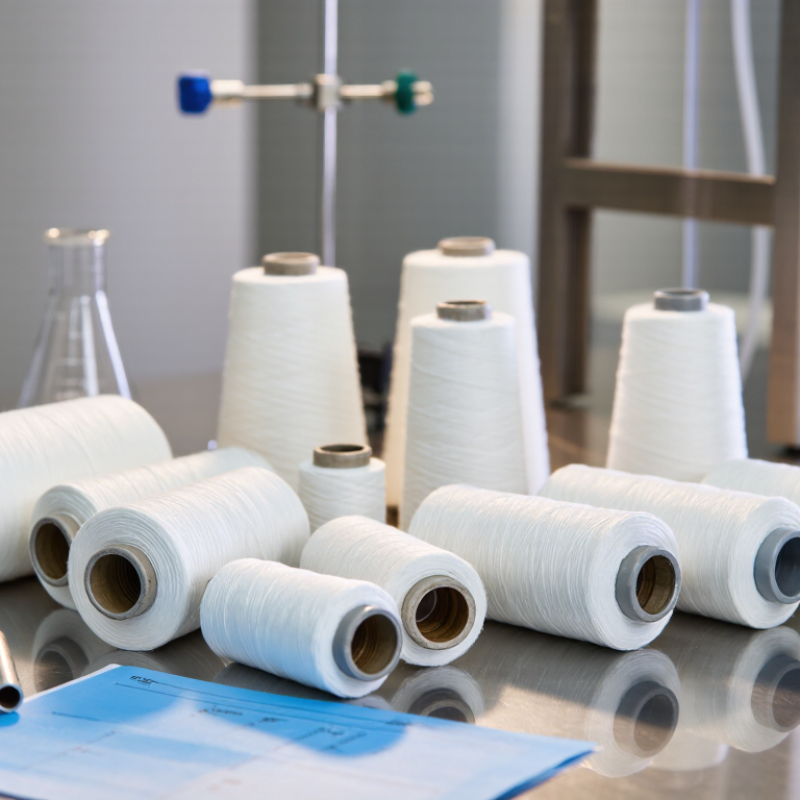
Top 10 String Wound Filter Cartridges for Global Buyers

What String Wound Filter Cartridges Are and How They Work

String wound filter cartridges are depth filters made by wrapping yarn around a perforated core. The yarn may use polypropylene, cotton, polyester, or other compatible materials. Its layered structure creates many passages for suspended solids. Larger particles remain near the outer surface, while finer particles move deeper into the winding. This design helps protect pumps, membranes, nozzles, and process equipment from sediment.

The working principle is simple. Contaminated liquid enters from the outside and travels toward the central core. Particle capture depends on yarn density, winding pattern, cartridge length, and the stated micron rating. A tighter winding usually improves removal, but it can also increase pressure drop. Watch the gauge.

In field applications, I check fluid temperature, viscosity, chemical compatibility, and expected dirt loading before selecting a cartridge. A nominal rating may describe approximate retention, while an absolute rating follows stricter test conditions. These terms should not be treated as identical. The cartridge must also fit the housing correctly, with seals seated evenly and no bypass path around the element.

A clean cartridge is not always better for long-term operation. As trapped solids build up, filtration can improve briefly, then flow may fall sharply. Replacing the element only by calendar date can waste capacity. Replacing it too late can stress equipment. Actual pressure readings should guide maintenance, although real systems rarely behave perfectly. Variations in yarn quality, water chemistry, and installation practice still deserve careful review.

Top 10 String Wound Filter Cartridges for Global Buyers

What String Wound Filter Cartridges Are and How They Work

String wound filter cartridges are depth filters made by wrapping fiber yarn around a rigid core. The winding pattern creates progressively smaller passages toward the center, allowing the cartridge to retain suspended solids throughout its depth. Common nominal ratings range from approximately 1 to 100 microns; lower ratings are generally selected for finer sediment removal, while higher ratings are used for coarse prefiltration. Actual performance depends on the media, liquid, particle shape, flow rate, and differential pressure.

Key Specifications for Comparing String Wound Filter Cartridges

Comparing the top 10 string wound filter cartridges requires more than reading the advertised micron rating. Buyers should check whether the rating is nominal or absolute, because these terms can describe very different particle-removal performance. ISO 16889 testing also uses defined multi-pass conditions, so test results deserve more attention than a simple catalog claim. A 5-micron cartridge may perform differently across water, solvents, and viscous process fluids.

Flow rate and pressure drop should be reviewed together. Start with the real operating flow, then examine the clean pressure drop at that point. Length, outside diameter, core size, and end-cap configuration must match the housing exactly. Material compatibility matters too. Polypropylene yarn may suit many water applications, while other fluids require different yarn or core materials. Temperature limits, extractables, and chemical resistance should appear in the technical file. Shorter cartridges can reduce cost, but they may load faster.

The WHO/UNICEF Joint Monitoring Programme reported that 2.2 billion people lacked safely managed drinking water in 2022, showing why dependable filtration data matters. UNESCO’s 2024 World Water Development Report also notes that agriculture uses about 70% of global freshwater withdrawals. Buyers should therefore compare dirt-holding capacity, replacement intervals, and disposal conditions, not only purchase price. In field reviews, I often see pressure-drop data missing. That is a warning sign. I have also learned that a higher micron rating is not automatically better; the correct choice depends on the contaminant, flow, temperature, and required service life.

Top 10 String Wound Filter Cartridges for Global Buyers

Top 10 String Wound Filter Cartridges for Global Buyers

Global buyers often compare string wound cartridges by media, micron rating, size, and operating temperature. These filters capture particles through a deep, winding structure. The right choice depends on fluid viscosity, dirt load, and pressure conditions. The ten practical options include polypropylene for general water treatment, cotton for low-cost applications, polyester for stronger chemical resistance, nylon for selected process fluids, glass fiber for fine particle capture, stainless steel for high-temperature service, PTFE for demanding chemical duties, polypropylene with a wide-core design, high-density winding for heavy sediment, and graded-density winding for longer service life.

Polypropylene remains a common choice because it offers low extractables and broad chemical compatibility. Cotton can perform well in less aggressive fluids, but it may swell or shed fibers. Polyester usually handles repeated exposure better. Glass fiber can provide finer filtration, although it needs careful handling. Stainless steel supports hot processes, yet its purchase cost is higher. PTFE can suit specialized fluids, but buyers should verify seal compatibility and temperature limits.

Experienced purchasers should request actual micron test data, not only a rating printed on packaging. Check cartridge length, end-cap style, core material, flow direction, and pressure drop. A five-micron cartridge from one supplier may perform differently from another. That detail is easy to miss. Batch traceability, clean packaging, and export-ready labeling also matter for international shipments. I would not call one cartridge best for every plant; field trials and replacement records often reveal weaknesses that a catalog cannot show.

Top 10 String Wound Filter Cartridges for Global Buyers
Rank Cartridge Type Winding Material Typical Nominal Rating Common Lengths Core and End Configuration Typical Temperature Capability Common Applications Global Buyer Considerations
1 Polypropylene String Wound Cartridge Polypropylene yarn 1–100 μm 10, 20, 30, and 40 inches Polypropylene core; DOE or standard end styles Up to approximately 80°C, depending on construction General water filtration, process water, food and beverage prefiltration, and chemical-compatible applications Low extractables and broad chemical compatibility; confirm compatibility with oxidizers and elevated temperatures.
2 Cotton String Wound Cartridge Natural cotton yarn 1–100 μm 10, 20, 30, and 40 inches Polypropylene, stainless steel, or other compatible core options Commonly up to approximately 60–80°C, depending on the core and housing Hydrocarbon-based liquids, lubricating oils, solvents, and applications requiring natural fiber media Good liquid absorption characteristics; verify linting, extractables, and chemical compatibility before use.
3 Glass Fiber String Wound Cartridge Glass fiber yarn 1–100 μm 10, 20, 30, and 40 inches Polypropylene or corrosion-resistant metal core Often suitable for approximately 120–260°C, depending on binders and construction High-temperature liquids, specialty chemicals, oils, and demanding industrial prefiltration Higher temperature potential than polymer yarns; check fiber shedding, binder compatibility, and required certifications.
4 Gradient-Density String Wound Cartridge Progressively varied yarn density 5–100 μm 10, 20, 30, and 40 inches Usually polypropylene core; multiple end configurations available Typically up to approximately 80°C for polypropylene construction Municipal water, industrial water, cooling-water systems, and high-solids liquid streams The open outer layers and tighter inner layers can provide useful dirt-holding capacity; actual performance depends on winding density.
5 High-Dirt-Holding String Wound Cartridge High-loft polypropylene or cotton yarn 5–75 μm 20, 30, and 40 inches Large-flow polypropylene core; DOE or 222-style ends may be available Generally up to approximately 80°C for polypropylene designs Pretreatment for reverse osmosis, surface-water filtration, cooling towers, and heavily loaded process water Designed to extend service intervals; compare pressure-drop curves and dirt-loading data rather than micron rating alone.
6 Chemical-Resistant Polypropylene Cartridge Chemically resistant polypropylene yarn 1–100 μm 10, 20, 30, and 40 inches Polypropylene core; suitable end style depends on the housing Typically up to approximately 80°C Acids, alkalis, plating solutions, chemicals, and industrial process liquids within compatibility limits Confirm concentration, temperature, exposure time, and compatibility with the core and end caps, not only the filter yarn.
7 Oil-Filtration String Wound Cartridge Cotton, polypropylene, or blended yarn 5–100 μm 10, 20, 30, and 40 inches Polypropylene or metal core, subject to fluid and temperature requirements Approximately 80–120°C, depending on media and core materials Hydraulic oil, cutting oil, lubricants, fuel-related liquids, and industrial oil purification Select based on viscosity, flow rate, pressure drop, and chemical compatibility; nominal ratings are not equivalent to absolute ratings.
8 High-Flow String Wound Cartridge High-surface-area polypropylene yarn 5–100 μm 20, 30, and 40 inches Large-diameter core or high-flow internal structure Generally up to approximately 80°C Large-scale water treatment, irrigation, cooling-water loops, and industrial prefiltration Supports higher flow in compatible housings; confirm cartridge diameter, housing capacity, and differential-pressure limits.
9 Fine-Filtration String Wound Cartridge Fine-grade polypropylene or glass fiber yarn 1–10 μm 10, 20, 30, and 40 inches Rigid polymer or metal core with suitable end configuration Approximately 80–260°C, depending on media selection Final prefiltration, laboratory water, beverage processing, fine chemical liquids, and sensitive equipment protection Lower micron ratings can create higher initial pressure drop; use staged filtration when feed solids are high.
10 Industrial Heavy-Duty String Wound Cartridge Polypropylene, cotton, or glass fiber yarn 10–150 μm 20, 30, and 40 inches Reinforced polymer or metal core; DOE and selected single-open-end designs Approximately 80–260°C, depending on materials Mining water, wastewater, metalworking fluids, industrial wash water, and high-solids process streams Prioritize mechanical strength, dirt-holding capacity, housing fit, and replacement availability for continuous-duty operations.
Specifications shown are representative industry ranges for non-branded string wound filter cartridges. Actual micron performance, flow rate, pressure-drop limits, temperature rating, end configuration, and chemical compatibility vary by construction and supplier. Buyers should verify the technical data sheet and applicable local compliance requirements before ordering.

How to Match Cartridge Design with Industrial Applications

Top 10 String Wound Filter Cartridges for Global Buyers

How to Match Cartridge Design with Industrial Applications

Choosing a string wound filter cartridge starts with the fluid, not the catalog image. Water, solvents, oils, and coatings behave differently inside the cartridge. A tightly wound polypropylene cartridge can suit many water lines, while cotton or glass fiber may fit other temperature or chemical conditions. Micron rating matters, but it does not tell the whole story. Viscosity, flow rate, operating temperature, and pressure loss must be checked together. In field trials, a cartridge with excellent particle removal sometimes creates excessive pressure drop. That choice fails quickly.

Cartridge length, core strength, end-cap style, and housing dimensions also affect performance. A long cartridge may improve capacity, but only when the housing supports it correctly. Sediment loading can block the outer layers first. Some designs need staged filtration, using a coarse cartridge before a finer one. This reduces replacement frequency and protects downstream equipment. A first selection is often imperfect. Real process data should challenge the original assumption.

Tips: Compare clean pressure drop before purchase. Confirm chemical compatibility at the highest process temperature. Ask for test data using particles similar to your actual contamination. Check whether the cartridge remains stable during start-up surges. Keep a replacement record with flow, pressure, and service hours. Small details matter. Evaluation should include one controlled trial, not only a supplier specification sheet.

Global Purchasing, Quality, and Compliance Considerations

Top 10 String Wound Filter Cartridges for Global Buyers

Global Purchasing, Quality, and Compliance Considerations

Global buyers should compare more than price. A cartridge may fit a 20-inch housing yet create excessive pressure loss. Procurement teams should record micron rating, core material, winding density, length, diameter, and operating temperature. Small differences matter. A dense outer layer can protect downstream equipment, while an uneven winding pattern may shorten service life.

Ask suppliers for batch records, material declarations, test data, and certificates of conformity. Confirm whether the stated micron rating is nominal or absolute. These terms are not interchangeable. For water, food-contact, or industrial use, verify the requirements in the destination market before ordering. Documents should match the actual production lot, not a generic product file. Packaging also deserves attention. Wet cartons, missing labels, or unclear expiry details can delay customs clearance and warehouse acceptance.

Quality checks should include sample testing and visual inspection. Measure cartridge length and check end-cap bonding. A simple trial run can reveal fiber shedding or rapid pressure increase. Do not rely on polished brochures alone. A complete certificate folder can still hide inconsistent production. That is an uncomfortable lesson. Buyers should also review factory controls, traceability methods, inspection frequency, and corrective-action records. One weakness remains: international compliance rules and customer specifications can change, so a previous approval may not remain sufficient.

Back To Top