
Skip to content

Why Buy Stainless Steel Shackles for Global Sourcing?

Why Buy Stainless Steel Shackles for Global Sourcing?

Global buyers increasingly need hardware that survives salt spray, humidity, and repeated handling. Stainless Steel Shackles offer a practical option for marine, construction, lifting, and industrial applications. Their corrosion resistance can reduce replacement frequency in harsh environments. That advantage matters when maintenance access is limited.

World Stainless reported approximately 58 million tonnes of global crude stainless steel production in 2023. This scale reflects a mature and widely supported material supply chain. Its Stainless Steel in Figures 2024 report also highlights stainless steel’s role in durable, long-life applications. However, stainless steel is not automatically stronger. Grade, forging method, heat treatment, pin design, and traceability all affect performance.

Professional sourcing requires more than comparing unit prices. Buyers should verify working load limits, material certificates, surface finish, and dimensional tolerances. ASME B30.26 provides guidance for rigging hardware, while EN 13889 covers forged steel shackles for lifting purposes. These references help procurement teams assess suppliers consistently across regions. Independent testing laboratories can also confirm mechanical properties and corrosion performance.

A polished shackle can look reassuring. Appearance proves little.

In real purchasing projects, small details create large risks. A mismatched pin may delay installation. An unclear certificate may weaken quality assurance. A reliable supplier should provide batch identification, inspection records, and clear application limits. Stainless Steel Shackles may cost more initially, yet lifecycle value can improve where corrosion drives downtime. The calculation is not perfect, though. Buyers should compare total ownership costs, not assume stainless steel is always the cheapest solution.
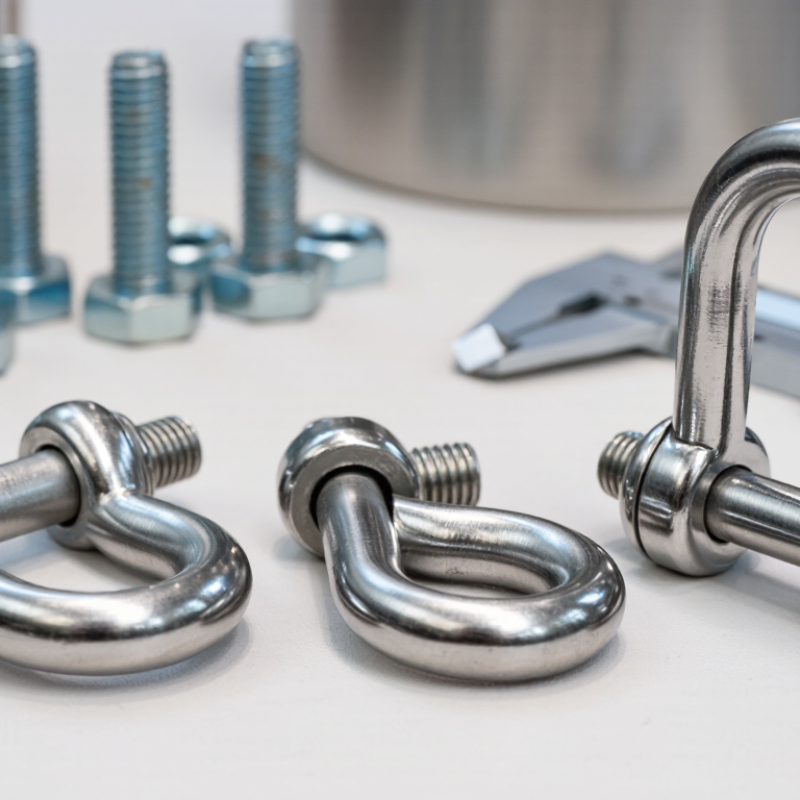
Why Buy Stainless Steel Shackles for Global Sourcing?

Stainless Steel Shackles: Definition, Types, and Main Applications

Stainless steel shackles are load-connecting hardware with a body and removable pin. They join slings, chains, ropes, and lifting points. Their stainless construction offers strong corrosion resistance in salt air, humid workshops, and outdoor installations. However, stainless steel is not corrosion-proof in every environment. Surface contamination and chemicals can still cause staining or damage.

Common types include bow shackles, D shackles, screw-pin shackles, and bolt-type shackles. Bow shackles provide more room for several connections. D shackles suit straight-line loading. Screw pins allow quick assembly, while bolt-type designs support more permanent connections. Each type needs a clearly marked working load limit. Never judge capacity by size or appearance alone.

In marine work, shackles connect mooring components and deck hardware. In construction, they support temporary lifting arrangements and equipment positioning. They also appear in outdoor structures, safety systems, and industrial rigging. During sourcing, buyers should check material grade, pin fit, thread quality, traceability, and inspection records. A clean finish is useful, but it does not prove safe performance. Field checks often reveal small problems, such as loose pins or unclear markings. Those details are easy to overlook. Suppliers should provide test documentation and consistent packaging for international shipments. Product descriptions can still be incomplete, so technical drawings and load data deserve careful review before purchase.

Key Advantages of Stainless Steel in Global Sourcing

When sourcing shackles across borders, stainless steel provides practical advantages in demanding environments. It resists rust in wet warehouses, coastal facilities, and outdoor lifting areas. Its clean surface also suits applications where regular washing is necessary. Depending on exposure, 316 stainless steel may resist chlorides better than 304 stainless steel. Grade selection still requires care. Stainless steel is not maintenance-free.

Durability can reduce replacement frequency, but purchasing decisions should include load ratings, dimensions, thread quality, and manufacturing consistency. A shackle with a smooth pin thread is easier to inspect and install. Clear markings support warehouse control and reduce picking errors. For global sourcing, reliable documentation matters too. Material certificates, inspection records, and batch traceability can help buyers compare suppliers objectively. These details often reveal quality gaps that attractive pricing hides.

Tips: Ask for the exact steel grade and applicable test records. Confirm the working load limit, not only the breaking load. Review photos of threads, pins, and surface finishing before shipment. Check whether packaging protects parts from scratches and mixed batches. When possible, order samples from different production lots. One sample can look excellent, while later consistency may disappoint.

Why Buy Stainless Steel Shackles for Global Sourcing?

Key Advantages of Stainless Steel in Global Sourcing

Stainless steel grades 304 and 316 contain significant chromium, which supports passive corrosion protection. Grade 316 additionally contains molybdenum, improving resistance in chloride-rich environments such as coastal and marine applications. The values shown are approximate midpoints of chemical composition ranges specified in ASTM A240/A240M and are presented for material-selection comparison, not as shackle load ratings.

How to Evaluate Shackle Quality, Standards, and Load Capacity

Stainless steel shackles are attractive for global sourcing because they resist moisture, salt spray, and many corrosive environments. However, a bright finish does not prove dependable performance. A polished surface can mislead.

Evaluate the material grade, manufacturing record, and intended application together. Ask for a material certificate, dimensional drawings, and a documented proof-test report. Standards such as ASME B30.26 or EN 13889 can provide useful benchmarks, but the actual product marking must match the supplied documents. Check the working load limit, not only the breaking load. These values are not interchangeable. A shackle rated for straight loading may have a lower capacity when side-loaded or used at an angle. The pin must seat fully, and the bow should carry the load without twisting.

Look closely at thread quality, pin alignment, casting or forging marks, and surface cracks. Stainless steel can still suffer from galling, especially on poorly lubricated threads. In practical inspections, I use a calibrated gauge and compare the shackle with its drawing. Small dimensional errors matter. Traceable batch numbers also help connect each item to testing and inspection records. Never select capacity from appearance alone. I would rather reject an attractive shackle with unclear documentation than accept a cheaper one with unverified ratings. That decision can feel excessive during purchasing, but missing records remain a serious weakness. Inspectors should also review storage conditions, because contamination from ordinary steel tools can leave rust stains on stainless surfaces.

Sourcing Factors: Suppliers, Certifications, Pricing, and Lead Times

Why Buy Stainless Steel Shackles for Global Sourcing?

Supplier quality matters more than a polished catalog. Ask for factory audit records, production capacity, and recent export references. World Stainless reported 58.4 million tonnes of crude stainless steel production in 2023. That scale offers choice, but it also creates uneven quality. Confirm the steel grade, forging process, heat treatment, and surface finish before comparing quotations. A supplier that answers with test records earns more trust than one offering only attractive photographs.

Certifications should match the shackle’s application.
Request material certificates, preferably EN 10204 3.1 documents, plus batch numbers and proof-test results. ISO’s 2022 Survey recorded 1,265,216 valid ISO 9001 certificates worldwide. Certification helps, but it does not replace product inspection. Check whether the certificate belongs to the actual factory. This detail is often missed. Sampling dimensions, pin hardness, working load limits, and marking quality can expose inconsistencies early.

Pricing needs a complete cost view. Include tooling, inspection, packaging, freight, duties, and replacement risk. The cheapest offer may become expensive after delays or rejected batches. Lead times also depend on steel availability, forging schedules, testing, and port congestion. UNCTAD reports that shipping carries over 80% of global merchandise trade by volume, so transit disruption affects planning. Request a written production schedule with buffer days. A realistic supplier may quote slightly longer. That can be more reliable than a perfect promise. Mistakes still happen, especially when forecasts change, so keep a backup source for critical sizes.

Import, Inspection, and Long-Term Maintenance Considerations

Importing stainless steel shackles requires more than comparing unit prices. Request clear specifications, including alloy grade, dimensions, working load limit, pin design, and surface finish. Ask for heat numbers, inspection reports, and traceable batch records. These documents support reliable purchasing and smoother customs processing. Check packing lists and country-specific import requirements before shipment. Small paperwork gaps can delay an otherwise sound order.

Inspection should begin when the shipment arrives. I examine threads, pins, holes, and body surfaces under good lighting. Look for cracks, deep scratches, pitting, distortion, or incomplete markings. Measure critical dimensions against the approved drawing. For lifting applications, arrange proof-load testing through a qualified inspection facility when required. Sampling can reduce cost, but it may miss isolated defects. No inspection plan is flawless.

Long-term maintenance depends on the working environment. Rinse shackles exposed to saltwater, then dry them completely. Remove dirt from threads and apply suitable lubricant where the manufacturer permits it. Store them on a dry rack, away from acids, heat, and standing water. Inspect before every use for wear, bending, damaged pins, or corrosion. Never repair load-bearing parts by welding or heating. I have seen teams overlook storage conditions while focusing on purchase quality. That mistake deserves more attention.

Why Buy Stainless Steel Shackles for Global Sourcing? - Import, Inspection, and Long-Term Maintenance Considerations
Decision Area Key Metric or Requirement Practical Guidance for Buyers Inspection or Documentation Evidence
Material Selection Stainless-steel grade Select the grade according to the service environment. Austenitic grades commonly used for general corrosion resistance include 304 and 316. Grade 316 generally provides better resistance to chlorides because it contains molybdenum, but it is not immune to corrosion in severe marine or chemical conditions. Material certificate, heat or batch number, chemical composition report, and positive material identification when required.
Load Performance Working Load Limit (WLL) Confirm that the marked WLL is suitable for the complete lifting or rigging arrangement. Never use a shackle above its stated WLL, and account for sling angles, side loading, shock loading, and unequal load sharing. Product marking, rated-load table, dimensional drawing, and test certificate. WLL must not be confused with breaking load.
Design Shackle type and pin Bow shackles offer more room for connecting multiple components, while dee shackles are suited to more direct loading. Screw pins are convenient for temporary connections; bolt-type pins are generally preferred where vibration or permanent installation is a concern. Technical drawing showing bow or dee geometry, pin style, thread details, and component dimensions.
Dimensional Control Critical dimensions and tolerances Check body diameter, pin diameter, inside width, inside length, thread engagement, and hole alignment. Dimensional compatibility is essential when the shackle is used with hooks, lifting eyes, wire rope assemblies, or chain fittings. Approved drawing, inspection report, calibrated measuring equipment, and agreed acceptance tolerances.
Surface Quality Finish and visible defects The surface should be clean and free from cracks, laps, sharp burrs, deep scratches, significant pits, and trapped processing residue. A smooth passivated or polished surface can improve cleanability and corrosion resistance, but appearance alone does not prove structural quality. Visual inspection under adequate lighting, surface-finish specification, and photographs of production samples.
Corrosion Control Passivation and contamination prevention Stainless steel relies on a protective chromium-rich oxide film. Passivation may remove free iron and processing contaminants, but it cannot correct poor alloy selection or eliminate corrosion caused by chloride exposure, crevices, or chemical attack. Passivation process record, treatment specification, cleanliness criteria, and test results where the application requires them.
Quality Inspection Sampling and traceability Establish a written inspection plan before production. Use lot or batch traceability so that dimensions, material records, test results, and corrective actions can be linked to the delivered goods. Inspection and Test Plan, sampling method, batch identification, nonconformance procedure, and retained inspection records.
Mechanical Testing Proof or load testing Where required by the applicable lifting-equipment standard, verify proof testing at the specified load and method. Testing should be performed by competent personnel using calibrated equipment; a proof test does not authorize use above the marked WLL. Test certificate stating shackle identification, test load, test date, equipment details, result, and authorized signatory.
Standards Applicable technical requirements Identify the destination-market and application-specific requirements before purchase. Commonly referenced frameworks include standards for forged steel shackles, lifting accessories, and safe use of hardware, but the correct standard depends on the product design and intended service. Purchase specification naming the applicable edition, conformity statement, test reports, and product marking requirements.
Import Planning Shipping and customs data Confirm product description, material, quantity, net and gross weight, package dimensions, country of origin, tariff classification, and agreed Incoterms before shipment. Accurate data reduces customs delays and unexpected landed costs. Commercial invoice, packing list, transport document, certificate of origin when required, and customs classification review.
Packaging Protection during transport Use packaging that prevents impact damage, thread damage, moisture accumulation, and contact with carbon-steel particles. Keep stainless-steel components separated from contaminated tools or untreated steel where practical. Packaging specification, loading photographs, moisture-control measures, and pre-shipment inspection records.
Receiving Inspection Incoming acceptance checks On receipt, compare quantities and markings with the order, inspect packaging damage, verify dimensions and thread operation, check for corrosion or contamination, and quarantine items with missing identification or suspected structural damage. Goods-receipt checklist, dimensional results, photos, quantity reconciliation, and nonconformance report where applicable.
Operating Safety Correct loading practice Load the shackle in line with its design and keep the pin fully engaged. Avoid side loading, point loading, bending, shock loading, and contact with edges that can damage the body or pin. Use compatible components and follow the rated configuration. User instructions, lifting plan, operator training record, and pre-use inspection checklist.
Routine Maintenance Cleaning and lubrication Rinse salt, chemicals, dirt, and other deposits with clean fresh water, then dry thoroughly. Clean threads and inspect the pin regularly. Use a lubricant compatible with the environment and application; avoid products that introduce contaminants or create a slipping hazard. Maintenance schedule, cleaning procedure, lubricant specification, and service records.
Periodic Inspection Wear, deformation, and corrosion Inspect for elongation, bending, damaged threads, pin distortion, excessive wear, cracks, deep pitting, heat damage, and illegible markings. The inspection interval should reflect usage frequency, load severity, environment, and applicable regulations. Competent-person inspection report, measurement records, defect photographs, and inspection history by identification number.
Retirement Criteria Removal from service Remove a shackle from service if it has cracks, significant deformation, unapproved welding or modification, unreadable markings, damaged threads, severe corrosion, suspected overload, or any defect that prevents reliable operation. Do not attempt unauthorized repair. Quarantine tag, disposal or replacement record, failure investigation, and corrective-action documentation.
Long-Term Value Total cost of ownership Compare more than the purchase price. Consider material suitability, inspection requirements, corrosion exposure, expected service life, replacement frequency, downtime risk, documentation quality, and the cost of maintaining traceability. Landed-cost model, maintenance history, replacement rate, warranty terms, and supplier quality-performance records.
Important: Stainless steel shackles are not automatically suitable for every lifting, marine, chemical, or safety-critical application. Confirm the correct material, design, working load limit, applicable standards, and inspection regime with a qualified engineer or competent person before use.
Back To Top