Why Invest in a Cans Filling Machine for Your Business?
Why invest in a Cans Filling Machine when manual filling still appears manageable? The answer becomes clearer during a busy production shift. Operators face foaming cans, uneven fill levels, dripping valves, and repeated cleaning tasks. A modern filling machine controls flow, pressure, temperature, and container movement more consistently. It can also reduce product loss around the conveyor and improve workplace organization.
Industry data supports this investment. The Business Research Company’s Beverage Cans Global Market Report 2024 identifies continued growth in beverage-can demand, driven by convenience, portability, and expanding packaged-drink consumption. Grand View Research also forecasts sustained growth in the global beverage cans market through the decade. These trends create pressure for faster, cleaner, and more repeatable packaging systems. PMMI’s 2024 State of the Industry report highlights labor availability, automation, and production efficiency as major concerns for packaging manufacturers. A Cans Filling Machine directly addresses these operational challenges.
Still, automation is not a magic fix. A machine can fill cans quickly, but poor sanitation, incorrect settings, or weak maintenance can damage quality. That matters. Businesses should evaluate filling accuracy, compatible can sizes, cleaning procedures, changeover time, energy use, and technical support before purchasing. Equipment should match the product, not merely the sales brochure. When properly specified and maintained, a Cans Filling Machine can support higher output, more stable quality, and better use of skilled employees. The return may not appear immediately, especially for small producers. Yet measured over consistent production cycles, the operational gains can become difficult to ignore.
What Is a Cans Filling Machine?
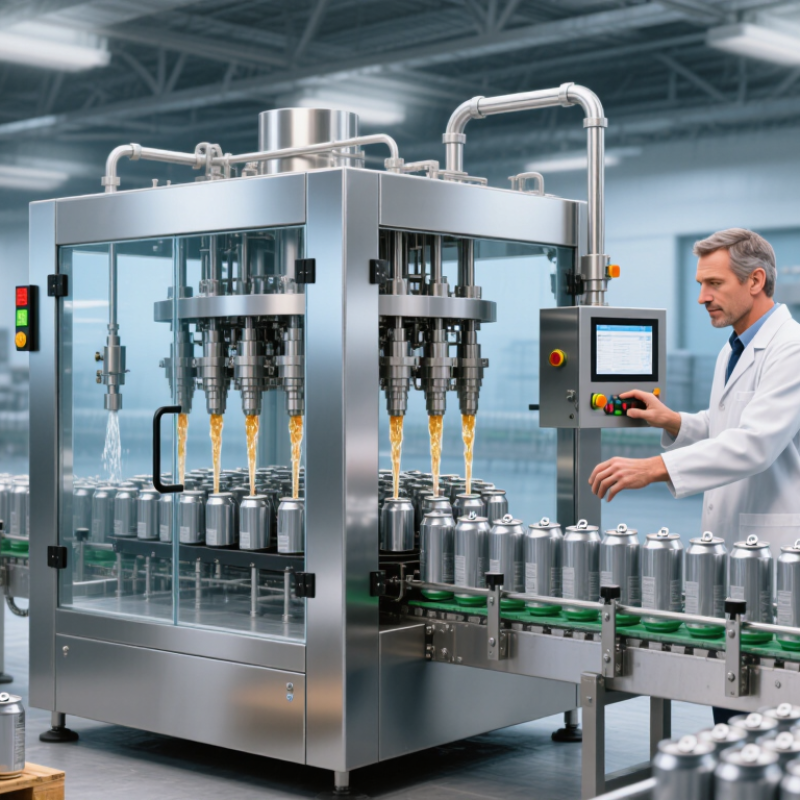
A cans filling machine fills empty metal cans with beverages or liquid foods at controlled speed and volume. It usually includes a can infeed, rinsing section, filling valves, level controls, and a seaming unit. The machine may use gravity, pressure, or counter-pressure filling, depending on the product.
In daily operation, sensors position each can beneath a filling valve. The system measures liquid levels and reduces spills before the lid is sealed. A reliable seamer then joins the lid to the can body. Small errors matter. A weak seam can cause leaks, oxidation, or product loss. The World Health Organization estimates that 600 million people become ill from contaminated food each year. This highlights why hygienic design, cleaning access, and process verification deserve serious attention. A filling machine is not simply a faster funnel.
Tips: Check seam quality during every production shift. Measure fill volume, temperature, and dissolved oxygen. Keep a written cleaning record. PMMI packaging industry reports consistently identify automation and labor efficiency as major manufacturing priorities. However, automation does not remove responsibility. Operators still need training, calibration, and practical judgment. The U.S. Environmental Protection Agency reports that recycling aluminum saves about 95% of the energy required to make it from raw materials. Efficient filling can support this advantage by reducing rejected cans and unnecessary material waste. Some businesses may overestimate speed. Product compatibility and maintenance often matter more.
How Does a Cans Filling Machine Work?
Why Invest in a Cans Filling Machine for Your Business?
A cans filling machine moves empty cans along a conveyor into a controlled filling station. Sensors check each can’s position before liquid enters through calibrated valves. The machine may fill by level, volume, or pressure, depending on the product. Pressure filling can reduce foaming in carbonated drinks. After filling, the cans move toward sealing equipment. The process is continuous, measured, and easier to monitor than manual filling.
In daily operation, consistency matters more than impressive speed. Operators should inspect valves, conveyors, and sensors before production begins. A small alignment problem can cause splashes, underfilled cans, or product waste. Clean, food-safe contact parts also support hygienic production. Filling accuracy should be tested regularly with verified measuring tools. Records help identify changes between batches. No machine is flawless. Temperature, liquid thickness, and foam can still affect performance, so practical adjustments may be necessary.
Tips: Keep the conveyor steady and avoid sudden speed changes. Check fill levels at scheduled intervals. Clean the filling heads according to the equipment instructions. Train operators to recognize unusual noise, dripping, or pressure changes. Do not chase maximum speed too early. A slower, stable line may protect product quality and reduce costly rework.
What Are the Main Advantages of Automated Can Filling?
Why Invest in a Cans Filling Machine for Your Business?
Automated can filling improves control where manual handling often varies. Each can receives a measured volume, reducing underfills, overfills, and product giveaway. The improvement becomes visible on the production floor: fewer spills, steadier conveyor movement, and cleaner changeovers. PMMI’s 2024 packaging machinery research identifies labor availability and operating efficiency as major investment concerns for manufacturers.
The workforce pressure is real. A 2024 report from Deloitte and the Manufacturing Institute projects 3.8 million new manufacturing jobs in the United States by 2033, with about 1.9 million potentially unfilled. A can filler cannot solve every staffing problem. It can, however, reduce repetitive manual work and help operators focus on inspection, sanitation, and quality records. That matters during long shifts.
Consistency matters most.
Modern fillers can record speed, fill volume, stoppages, and rejected units. These records support traceability and reveal small problems before they become costly downtime. The International Federation of Robotics reported 541,302 industrial robots installed worldwide in 2023, showing how quickly factories are adopting controlled automation. Still, automation is not magic. Poor calibration, weak cleaning routines, or unsuitable containers can create waste faster than expected. A practical evaluation should examine product viscosity, can size, changeover time, maintenance access, and operator training before purchase. The cheapest machine may become the most expensive after repeated adjustments.
How Should You Evaluate a Cans Filling Machine Investment?
Evaluating a cans filling machine should begin with your production data, not its catalog price. Record hourly demand, can sizes, product viscosity, and available floor space. Include seasonal peaks. A machine rated for 3,000 cans per hour may perform poorly during frequent size changes. Ask for test results using your actual product, containers, and closure system. Small differences in fill accuracy can create visible waste across thousands of cans.
Examine the filling system, sanitation process, and changeover design. Stainless steel contact parts should be easy to remove and inspect. Check whether operators can clean valves without special tools. Measure the changeover time with a stopwatch, not a sales estimate. Also review utility needs, including power, compressed air, water, and drainage. A quiet machine is useful, but reliable controls and accessible maintenance points matter more.
Calculate the total cost over five years. Include installation, training, spare parts, downtime, energy use, and routine servicing. Request clear documentation and a realistic response time for technical support. Ask what happens when a sensor fails during a night shift. No forecast is perfect. A spreadsheet can still mislead if it ignores rejected cans and delayed deliveries. Consider a short production trial before signing. The machine may look efficient on paper, yet feel unsuitable beside your actual line. Operator feedback matters, especially after several hours of repetitive work. Some decisions need more questioning.
Why Invest in a Cans Filling Machine?
Evaluating a cans filling machine requires comparing production capacity with labor requirements. The chart below presents an illustrative operating model for a single-shift beverage line.
As automation increases, estimated output rises from 1,200 to 6,000 cans per hour while direct operator requirements decrease from four people to one. A practical investment decision should also consider purchase cost, maintenance, energy consumption, product changeover time, quality consistency, and the expected payback period.
Planning assumptions shown for comparison only; actual performance depends on can format, beverage type, line configuration, and operating conditions.
