Skip to content

What Are the Best CNC Solutions for Manufacturers in 2026?

Choosing the best CNC solutions for manufacturers in 2026 means looking beyond a machine’s price or maximum spindle speed. The right choice depends on the work: material, part geometry, tolerances, batch size, and the skills available on the shop floor. A compact three-axis mill may suit repeatable components, while complex parts could justify five-axis machining or a CNC lathe with live tooling. The fit matters.

Automation is also changing the decision. The International Federation of Robotics reported 541,302 industrial robot installations worldwide in 2023 in its World Robotics 2024 report. That figure does not measure CNC adoption directly, but it signals the scale of investment in automated production. Manufacturers comparing CNC cells should therefore examine how machines connect with robots, inspection equipment, scheduling software, and existing production systems. A fast machine that creates a bottleneck elsewhere is not a good solution.

Reliable comparisons also need practical evidence: cycle-time trials, tolerance results on representative parts, service response times, and realistic operating costs. Ask suppliers to demonstrate the actual workflow, from loading stock to verifying a finished component. Small details count, including chip removal, tool changes, and operator access. No machine is perfect. And forecasts are not guarantees. Industry reports provide useful context, but they cannot replace a shop-specific trial. This guide examines the CNC technologies, automation options, and selection criteria manufacturers should weigh before investing in 2026.
What Are the Best CNC Solutions for Manufacturers in 2026?

What CNC Solutions Include in Modern Manufacturing

Modern CNC solutions include more than a cutting machine. They bring together machine tools, CAD/CAM software, controllers, cutting tools, workholding, and inspection equipment. A typical production cell may receive a digital drawing, generate toolpaths, and turn a metal blank into a finished component. The controller then coordinates spindle speed, feed rate, and tool movement. Small details matter. A poorly clamped part can shift, even when the program looks correct.

Tooling and workholding are selected for the material, part shape, and production volume. A vise may suit a simple block, while a custom fixture can hold several parts during one cycle. Probes and measuring equipment help check dimensions during or after machining. Automated loaders can reduce repetitive handling, but they still need careful setup and monitoring. Not always.

Modern systems also connect production data with scheduling, maintenance, and quality records. Sensors may flag unusual vibration or temperature before a tool fails, though alerts need context; a warning is not a diagnosis. Operators remain essential. They catch burrs, listen for changes in cutting sound, and notice when a setup feels wrong. A digital plan can miss these shop-floor details, so teams need time to review results and adjust processes between runs.

What Are the Best CNC Solutions for Manufacturers in 2026?

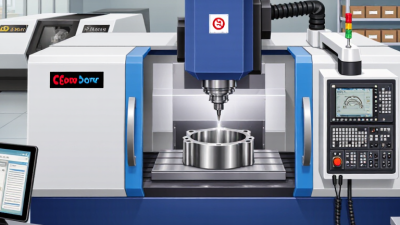
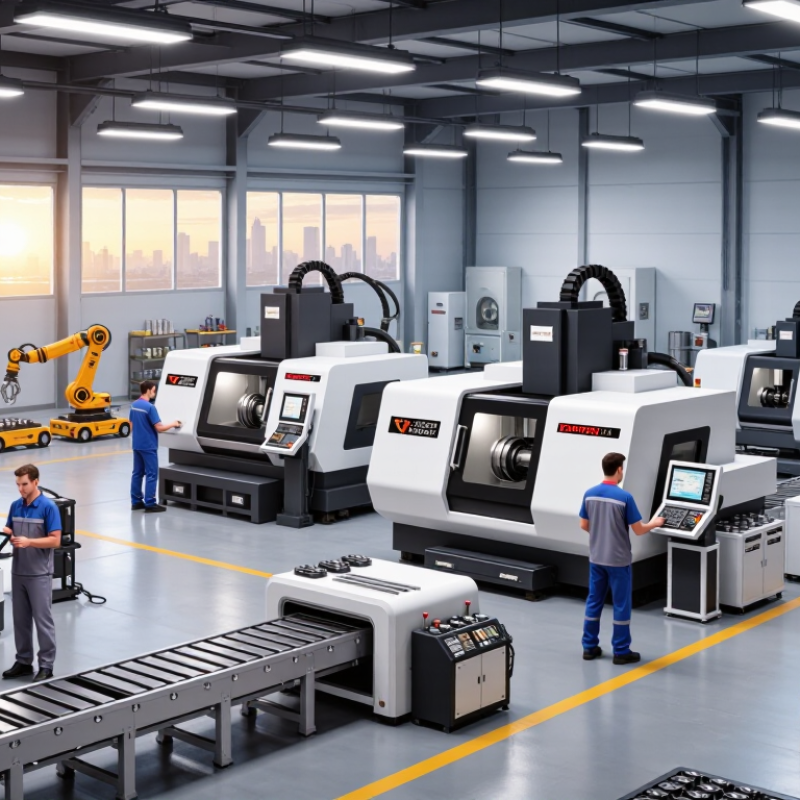
Modern CNC manufacturing spans turning and milling configurations with different levels of motion control. The chart compares common machine setups by the number of controlled axes; actual capabilities vary by machine.

Which CNC Machine Types Serve Different Production Needs

What Are the Best CNC Solutions for Manufacturers in 2026?

Which CNC Machine Types Serve Different Production Needs

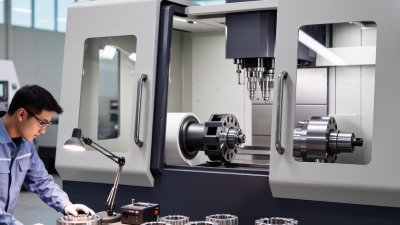
Choosing a CNC machine starts with the part, not the machine’s headline specifications. A vertical mill suits flat faces, pockets, and drilled features on metal components. A CNC lathe turns shafts, pins, and other round parts efficiently. For large sheets of wood, plastic, or aluminum, a CNC router offers a broad cutting area. Grinders are useful when a part needs a very smooth finish or tight dimensional control. Small parts matter.

Tips: Match the machine’s work envelope to your largest part, then check spindle speed, tool capacity, and setup time. Ask operators to review sample parts before committing.

Production volume changes the decision. A three-axis mill may handle varied jobs with straightforward programming. A four- or five-axis machine can reach multiple faces with fewer setups, but it often requires more advanced programming and careful workholding. That trade-off is real. For repeat production, automation can reduce manual handling; for frequent design changes, a flexible setup may be more practical. Don’t overlook the basics: floor space, operator skills, maintenance access, and chip removal all affect daily output. A machine can look ideal on paper and still be awkward beside a crowded workbench.

What Are the Best CNC Solutions for Manufacturers in 2026? — Which CNC Machine Types Serve Different Production Needs

CNC Machine Type How It Works Best Production Needs Typical Materials and Parts Main Advantages Key Considerations
3-axis vertical milling machine The cutting tool moves along the X, Y, and Z axes while the workpiece is held in a fixture. General-purpose machining, prototypes, maintenance work, and small-to-medium production runs. Aluminum, steel, stainless steel, plastics; plates, brackets, housings, and flat-sided components. Versatile, widely used, and suitable for many common milling operations. Parts with features on multiple sides may need repositioning, adding setup time and potential alignment error.
5-axis milling machine Three linear axes work with two rotary axes to orient the tool or workpiece during machining. Complex parts, contoured surfaces, and components that benefit from fewer setups. Aluminum, titanium, steel, and composites; turbine components, impellers, molds, and medical components. Can machine multiple faces or complex geometries in fewer setups, improving access to difficult features. Requires more advanced programming, setup, and operator expertise; the investment may not suit simple parts.
CNC turning center (lathe) The workpiece rotates while stationary cutting tools shape its outside and inside diameters. High-volume or repeat production of rotational parts. Steel, aluminum, brass, plastics; shafts, pins, bushings, and threaded components. Efficient for cylindrical geometry and consistent diameter, facing, and threading operations. Less suitable for parts dominated by non-round features unless additional driven-tool capability is available.
CNC mill-turn center Combines turning with milling operations, often using driven tools and additional axes in one machine. Complete machining of parts that include both rotational and milled features. Steel, stainless steel, aluminum, and titanium; valve components, connectors, and precision shafts. Can reduce transfers between machines and consolidate several operations into one setup. Programming and process planning are more involved; machine utilization should justify the added capability.
CNC router A high-speed spindle moves a cutting tool across a gantry-style work area, commonly over sheet material. Nested sheet production, signage, cabinetry, panels, and large-format cutting. Wood, plywood, MDF, plastics, foam, and some non-ferrous metals, depending on machine design. Large work areas and efficient cutting of sheet goods with repeated two-dimensional profiles. Rigidity, workholding, dust or chip extraction, and material-specific cutting conditions affect results.
Swiss-type CNC lathe A guide bushing supports bar stock close to the cutting tools as the machine produces small turned parts. High-volume production of small, slender, or precision components. Stainless steel, brass, titanium, and engineering plastics; medical, electronic, and instrumentation parts. Close workpiece support helps control deflection on long, small-diameter parts; multiple tools can work efficiently. Best suited to compatible bar-fed work; setup and tooling are specialized compared with general turning.
CNC grinding machine An abrasive wheel removes small amounts of material to produce precise dimensions and surface finishes. Finishing operations where tight dimensional control or a fine surface is required. Hardened steel, carbide, ceramics, and other grindable materials; shafts, tools, bearings, and precision surfaces. Can achieve finishes and dimensional accuracy that may be difficult to obtain through cutting alone. Usually follows an earlier machining operation; wheel selection, dressing, and thermal control matter.

Selection note: The most suitable machine depends on part geometry, material, tolerances, production volume, setup requirements, and available operator skills. Capabilities vary by machine configuration and process.

How CNC Automation and Software Improve Manufacturing

What Are the Best CNC Solutions for Manufacturers in 2026?

How CNC Automation and Software Improve Manufacturing

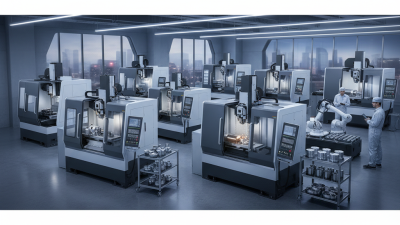
For manufacturers in 2026, strong CNC solutions connect machine tools with planning, programming, and production data. Automation can handle repeatable tasks, while CAD/CAM software helps teams prepare toolpaths and catch programming issues before cutting begins. Real-time monitoring can flag a worn tool or an unexpected cycle delay. That matters. Deloitte’s 2025 Smart Manufacturing Survey found that 92% of manufacturers expect smart manufacturing to be a primary driver of competitiveness within three years. The figure signals growing investment, but software alone cannot fix poor processes or unclear production data.

Connected systems can reduce manual data entry and make job changes easier to track. They also help supervisors compare planned cycle times with actual machine performance. Yet dashboards may show a delay without explaining its cause; operators still need context and practical training. A 2022 study by the National Institute of Standards and Technology describes digital manufacturing as a way to improve production visibility and decision-making, while noting the importance of trustworthy data. Results vary by shop size, workflow, and implementation.

Tips: Start with one recurring bottleneck, such as tool changes or setup delays. Record baseline cycle time, scrap, and downtime before adding automation. Test the new workflow on a small batch, ask operators what failed, and adjust before expanding. A modest pilot often reveals gaps that a polished demo misses.

What Factors Determine the Best CNC Solution for a Manufacturer

The best CNC solution depends on the parts a manufacturer actually makes, not the machine with the longest feature list. Start with part drawings, materials, batch sizes, and required tolerances. A shop cutting thick steel needs different spindle power and rigidity from one machining small aluminum housings. Check the work envelope against real components, including fixtures and tool access. Test the fit.

Material mix shapes tooling, coolant, and chip removal needs. For tight tolerances, review machine stability, thermal behavior, and measurement methods, not just advertised accuracy. Cycle time matters, but so do setup hours and changeovers. Noise matters. Ask operators where jobs stall: tool changes, programming, workholding, or inspection. Software compatibility can save time, yet a difficult interface may slow a skilled team.

Ownership costs include installation, tooling, training, maintenance, and downtime. Ask how quickly replacement parts and qualified service are available. A fast machine can still be a poor choice if it sits idle between large orders. Not every shop needs five-axis capability. Forecasts are imperfect; leave room for likely new work, but avoid paying for capacity with no clear use. The right choice may be less impressive on paper, and more dependable on an ordinary Tuesday.

How Manufacturers Can Evaluate and Adopt CNC Solutions in 2026

Choosing a CNC solution in 2026 should begin with the part, not the brochure. List tolerance ranges, material mix, batch sizes, and current changeover times. Then compare machine capacity, spindle performance, tool storage, control usability, and service response. Small details matter. One extra tool change can erase a promised cycle-time gain.

Deloitte and the Manufacturing Institute’s 2024 workforce study projected 3.8 million U.S. manufacturing roles by 2033. It warned that 1.9 million could remain unfilled. That makes operator training, simulation, and clear setup screens practical selection criteria. Before buying, run a representative part on a pilot cell and record cycle time, scrap, uptime, and setup variation. Keep the raw measurements.

Deloitte and MAPI’s 2025 Smart Manufacturing Survey found that 92% of respondents expected smart manufacturing to drive competitiveness within three years. That is not a guarantee of CNC returns. Use it as a reason to test connected workflows, not to buy every sensor. Compare tooling, fixtures, integration, maintenance, and energy costs—not just the machine price. A pilot can disappoint. That is useful evidence: the bottleneck may be scheduling, not cutting speed.

Back To Top