Skip to content

Best Precision CNC Machining Supplier in China?

Choosing the best precision cnc machining supplier in China takes more than comparing hourly rates. The right partner should understand your drawing, material, tolerance, and intended use. A turned aluminum housing may look simple, yet a misplaced hole can disrupt final assembly. Look beyond polished websites and impressive machine lists. Ask how the supplier handles tool wear, first-article inspection, and changes to a drawing. Request sample inspection reports, including measured dimensions and the equipment used. Confirm whether the quoted lead time includes setup, finishing, and packaging. Small checks prevent expensive surprises. Details matter.

Philip B. Crosby, a quality-management expert, made the memorable point, “Quality is free.” For buyers, that idea means checking process controls before defects reach the shipment. Ask about documented inspection steps, calibrated measuring tools, and how nonconforming parts are handled. A coordinate measuring machine report can help verify complex features, but it does not replace a clear agreement on measurement methods. Be specific. Share the latest drawing revision, critical dimensions, surface-finish requirements, and expected order volume. One weakness in many sourcing decisions is overreliance on a single sample. A good sample helps, but production consistency needs evidence across a batch. Some teams learn this late. The supplier’s answers should be precise, practical, and supported by records, not just reassurance. This guide examines those checks, alongside machining capability, communication, pricing, and delivery. No supplier is perfect. A careful comparison makes the trade-offs visible.
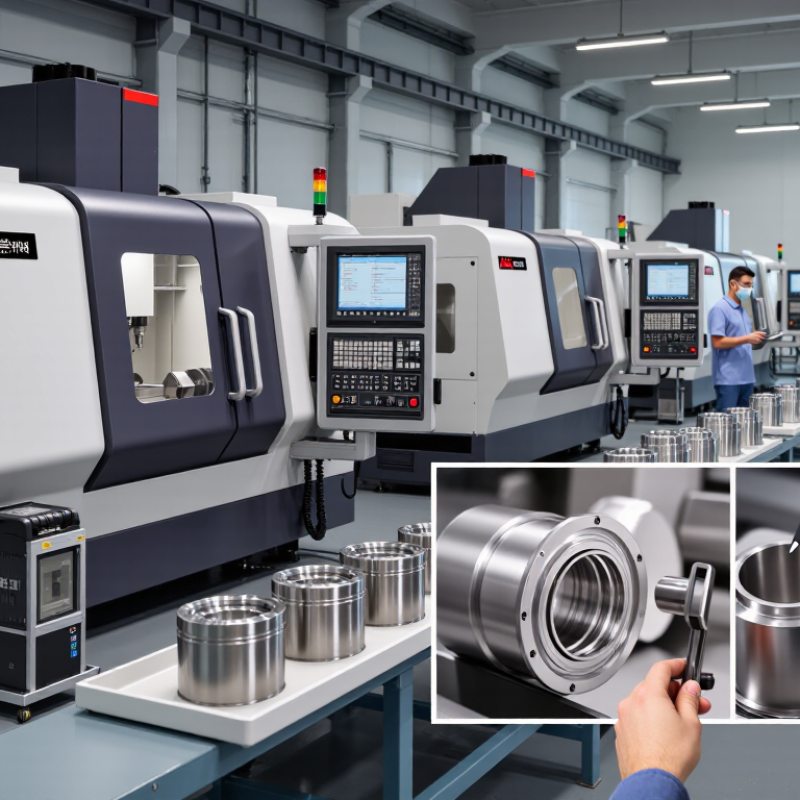
Best Precision CNC Machining Supplier in China?

What Defines a Precision CNC Machining Supplier in China?

A precision CNC machining supplier in China is defined by more than modern machines or a low quoted price. The supplier should control the full process, from reviewing drawings to inspecting finished parts. Look for clear answers about tolerances, materials, surface finishes, and production limits. Precision is proven in the parts, not promised in a sales email.

Ask how measurements are recorded and which inspection tools are used. A capable shop can explain when it uses micrometers, coordinate measuring machines, or gauges, and how results connect to your drawing. Ask for evidence. Sample inspection reports, material certificates, and a documented response to nonconforming parts help buyers assess reliability. Communication matters too: questions about a tight tolerance should reach someone who understands machining, not disappear between departments.

Consistency deserves close attention. A sample part may look excellent, while a later batch reveals tool wear, unstable setup, or unclear inspection criteria. Request a first-article check and agree on critical dimensions before production begins. Small details matter. Still, paperwork alone cannot guarantee quality, and even a thorough supplier can encounter process variation. Share realistic drawings, identify the features that affect fit, and ask what may need adjustment before committing to volume.

Which Machining Processes and Materials Should a Supplier Offer?

A capable precision CNC machining supplier should offer milling and turning, with multi-axis machining for complex parts. Three-axis milling handles many housings and brackets. Five-axis work can reduce setups for angled features, though it is not automatically the better choice. Ask how the supplier controls critical dimensions between operations. A clear inspection plan matters as much as the machine list.

Material options should match the part’s load, environment, and finish requirements. Common choices include aluminum for lightweight components, stainless steel for corrosion resistance, brass for conductive or easily machined parts, and engineering plastics for low-friction or insulating applications. Titanium may suit demanding strength-to-weight needs, but it can raise cost and lead time. Details matter. Request material traceability when required, and confirm that the proposed grade is actually available. A material name alone does not guarantee consistent performance.

Look for practical support with prototypes, drilling, threading, deburring, and surface finishing. Ask for sample inspection records or a first-article report, especially for tight tolerances. Share drawings with tolerances and finish callouts clearly marked. A supplier should flag features that are difficult to measure or machine before production begins. Even experienced shops can miss an assumption; a short design review can prevent a costly revision.

How to Assess Quality, Tolerances, and Certifications

A precision CNC supplier should be judged against your drawing, not a broad promise of “tight tolerances.” Ask how critical dimensions are measured, how often checks occur, and whether inspection equipment is calibrated. For a close-fit bore, request actual measurement results, not only a pass stamp. A coordinate measuring machine can verify complex geometry, while a calibrated micrometer may suit a simple shaft. Numbers matter. Review first-article reports and confirm they identify the part revision, measured features, and equipment used.

Certifications can support a quality review, but they are not proof that every process is controlled. Check the certificate’s scope, issuing body, and validity, then ask how nonconforming parts are contained and corrected. For traceability, request material records linked to the production lot. Ask for evidence that the shop can repeatedly hold your required tolerances across a production run, not just one sample. Not enough. A polished inspection report may still overlook burrs, surface finish, or a datum interpretation issue. I would compare a few measured parts with the drawing and clarify any ambiguous callouts before approving production. Some questions feel basic, yet they often reveal more than a long capabilities list.

Best Precision CNC Machining Supplier in China? - How to Assess Quality, Tolerances, and Certifications

Assessment Dimension What to Evaluate Evidence to Request Strong Assessment Signal Suggested Weight
Drawing-specific tolerances Can the supplier meet the part’s stated dimensions, geometric tolerances, and datum requirements? A review of the 2D drawing and 3D model; a written tolerance review; sample inspection results for critical features. The supplier identifies critical-to-quality features and confirms capability against the actual drawing rather than promising one blanket tolerance for every feature. 20%
Measurement and inspection Are measurement methods appropriate to feature size, tolerance, and geometry? Equipment list, calibration records, sample inspection report, and details of measurement methods such as CMM or surface-roughness measurement where relevant. Reports identify the drawing revision, measured characteristics, actual results, units, and equipment or method used. 15%
Quality management certification Does a current quality-management certificate cover the relevant legal entity, site, and manufacturing scope? Certificate copy, issuing certification body, validity dates, covered site, and scope; verify details with the issuer or its public directory when available. The certificate is current and its scope matches the work. ISO 9001 is a general quality-management standard; certification alone does not guarantee part quality. 10%
Industry-specific requirements Are additional quality or regulatory controls required for the product’s end use? Applicable certificates, scope and site details, documented procedures, and evidence that the supplier understands customer-specific requirements. Requirements are matched to the application. For example, ISO 13485 concerns medical-device quality management, while AS9100 addresses aerospace quality management; neither should be treated as universally necessary. 10%
Material traceability Can material grade and lot information be traced through production and delivery? Material test certificates or supplier documents, lot or heat numbers where applicable, and a sample traceability record. Records connect the material received to the finished parts, with any required grade, condition, or specification clearly identified. 10%
Process control and repeatability Are machining steps, tool changes, setup approval, and production changes controlled? Process flow, setup or first-article records, control plan where applicable, and procedures for nonconforming parts and process changes. The supplier can explain how the approved setup is maintained and how deviations are documented, contained, and communicated. 10%
Surface finish and secondary operations Can the supplier meet specified surface texture, deburring, coating, heat-treatment, or other finishing requirements? Process specifications, inspection methods, subcontractor controls where applicable, and sample records for specified finishing operations. Requirements are stated on the drawing or purchase specification and are verified with an appropriate method; no finish value is assumed when none is specified. 10%
First-article and ongoing inspection Is there a clear plan for validating initial parts and monitoring later production? First-article inspection report, agreed sampling plan, acceptance criteria, and sample records from production batches. Inspection frequency and acceptance criteria are agreed before production and are suitable for the order’s risk and customer requirements. 5%
Nonconformance and corrective action How are defects contained, investigated, corrected, and prevented from recurring? Redacted corrective-action example, nonconformance workflow, and escalation or notification procedure. The response identifies affected parts, root cause, corrective action, and verification of effectiveness. 5%
Technical communication and documentation Can the supplier clarify manufacturability questions and maintain revision control? Example of a drawing-query process, revision-controlled documents, and confirmation of inspection and delivery documentation. Questions about datums, tolerances, materials, or finishes are raised before machining, and production uses the approved revision. 5%
Total Suggested Evaluation Weight 100%

Note: Tolerance capability depends on the part geometry, material, machining process, measurement method, and specified conditions. Assess suppliers against the current drawing and application requirements; the weights above are a customizable evaluation framework, not industry-wide performance data.

How to Compare Pricing, Lead Times, and Communication

Best Precision CNC Machining Supplier in China?

How to Compare Pricing, Lead Times, and Communication

A low quote can look attractive until setup, inspection, or shipping appears as a separate charge. Ask each supplier to price the same drawing, material grade, quantity, finish, and tolerance range. Check whether the quote includes first-article inspection and packaging. Small details matter. A 0.02 mm tolerance on a bore may require extra checks and machine time. If one quote seems unusually low, ask what assumptions it uses. I would not treat price alone as proof of value.

Lead times need the same careful comparison. Ask for dates tied to actual steps: drawing review, material purchase, first-piece approval, production, and dispatch. For example, a supplier may quote ten working days but start counting only after material arrives. That distinction can change a project schedule. Request an update if a milestone slips, and ask how much time the estimate allows for rework. There is no perfect forecast; even a clear schedule can miss.

Communication is easier to judge with a real technical question. Send a marked-up drawing and ask whether a thin wall or deep pocket could affect machining. Notice whether the reply addresses the feature, asks for clarification, and explains any proposed change. A fast “yes” is not enough. Keep messages and drawing revisions organized, especially when dimensions change. I sometimes find that one unclear note causes more delay than a slow machine. That is an awkward lesson, but worth checking early.

How to Verify a Supplier Before Placing an Order

A polished website cannot prove machining capability. Ask the supplier to review your drawing and identify critical dimensions, tolerances, material grade, surface finish, and inspection method. A capable team should explain how it will hold a tight bore or prevent distortion in a thin wall. Request evidence from a comparable part, such as an anonymized inspection report or coordinate-measuring-machine results. Check when the measuring equipment was last calibrated. If possible, approve a first-article sample before authorizing a full production run.

Too vague.

Review the quotation for assumptions about tooling, setup, lead time, and inspection. Ask who handles engineering changes and how revisions are recorded. A brief video tour may show the machines, but it does not confirm process control. Ask how the supplier manages out-of-spec parts, material traceability, and corrective actions. Look for specific answers, not confident promises. A supplier that admits a tolerance may need testing deserves closer attention than one that says every requirement is easy. Small details matter. Compare the supplier’s answers with your drawing and quality needs, and keep the agreed inspection criteria in writing.

Back To Top